Designing for Identity Within Temporary Living
Leeds
Project Timeline: 1 week designing and sourcing, 2 day build
Interior Design Masters Challenge 5: View Episode
Completed
Studio apartments are often designed around efficiency first.
How much can fit into a compact footprint.
How many functions can coexist within a single room.
How flexible the layout can become.
But what interested me in this project was something slightly different: the emotional role these spaces often play.
For many young professionals moving into a city for the first time, a studio apartment represents far more than temporary accommodation. It becomes a first independent home. A first attempt at building routine, confidence, identity, and aspiration within an unfamiliar environment.
This project explored how a compact rental apartment might support that experience - not simply through practicality, but through atmosphere and emotional character.
Rather than designing for broad neutrality, the intention was to create a space with a clearer point of view.
“Each individual element was exceptional”
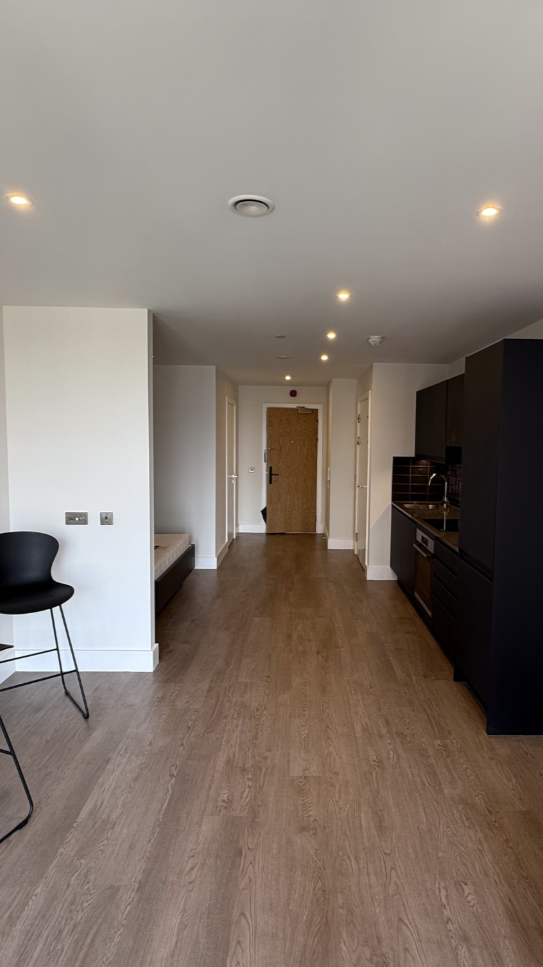
Before
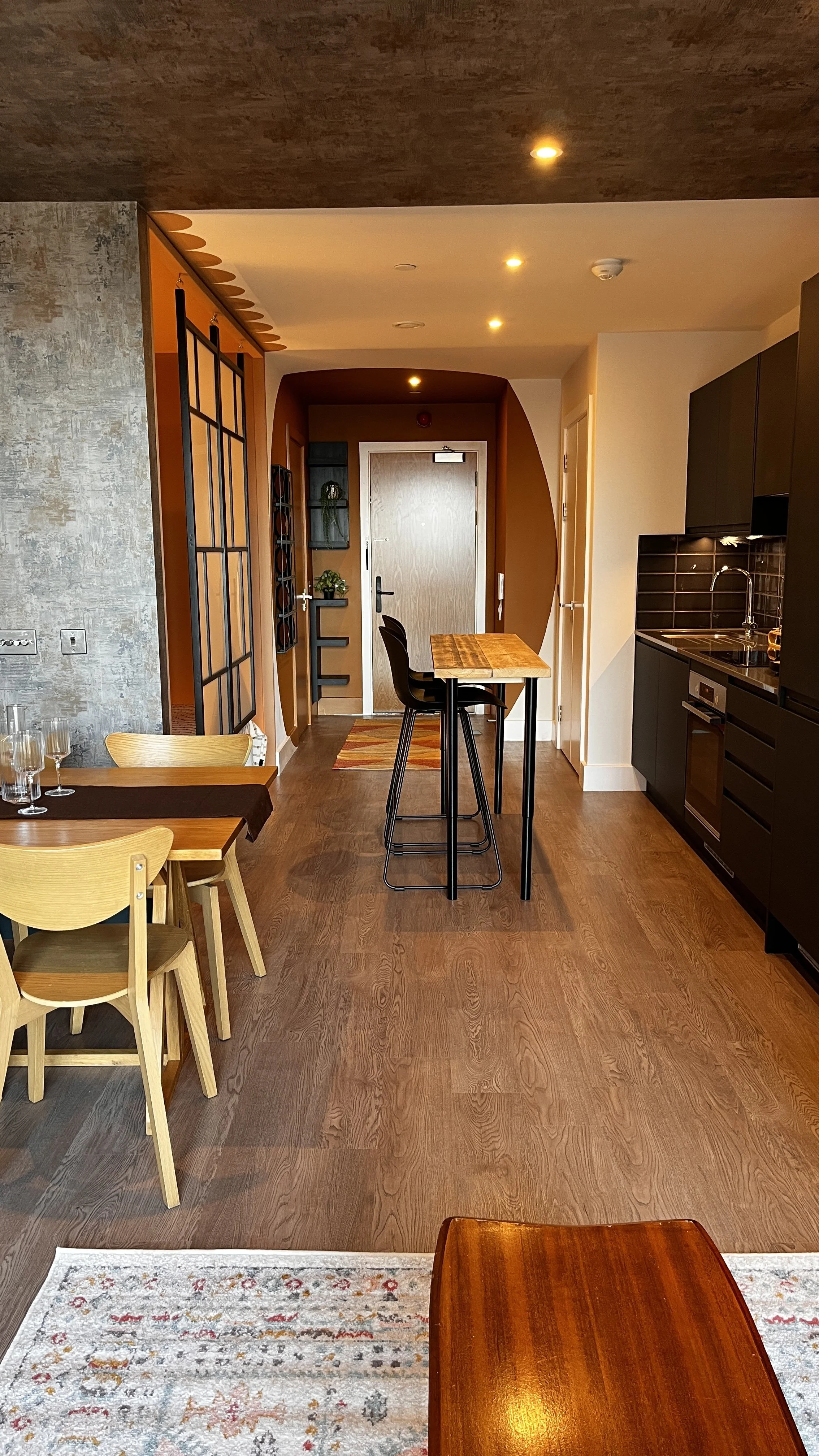
After
The design intentionally moved away from the lighter, minimal language often associated with rental interiors.
Instead, the apartment explored a more grounded and atmospheric approach through:
tonal layering
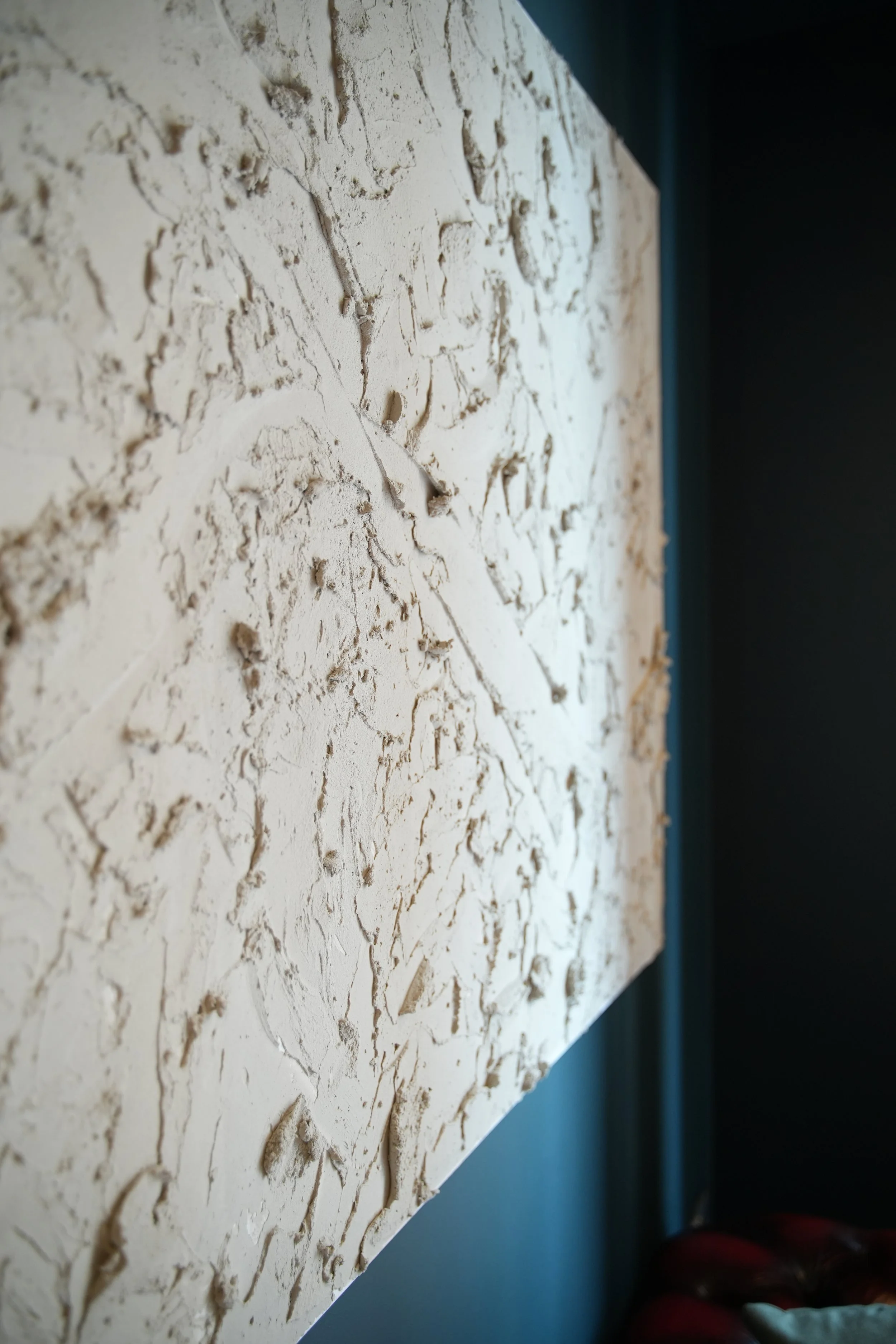
textured finishes
warmer lighting
darker material contrasts
softer moments of tactility
The intention was not to create something overtly styled or overly masculine, but a space that feels emotionally confident and quietly expressive.
Rather than relying on major structural intervention, the project used atmosphere itself as the primary design tool.
Colour, materiality, lighting, furniture, and staging became the mechanisms through which the apartment was transformed.
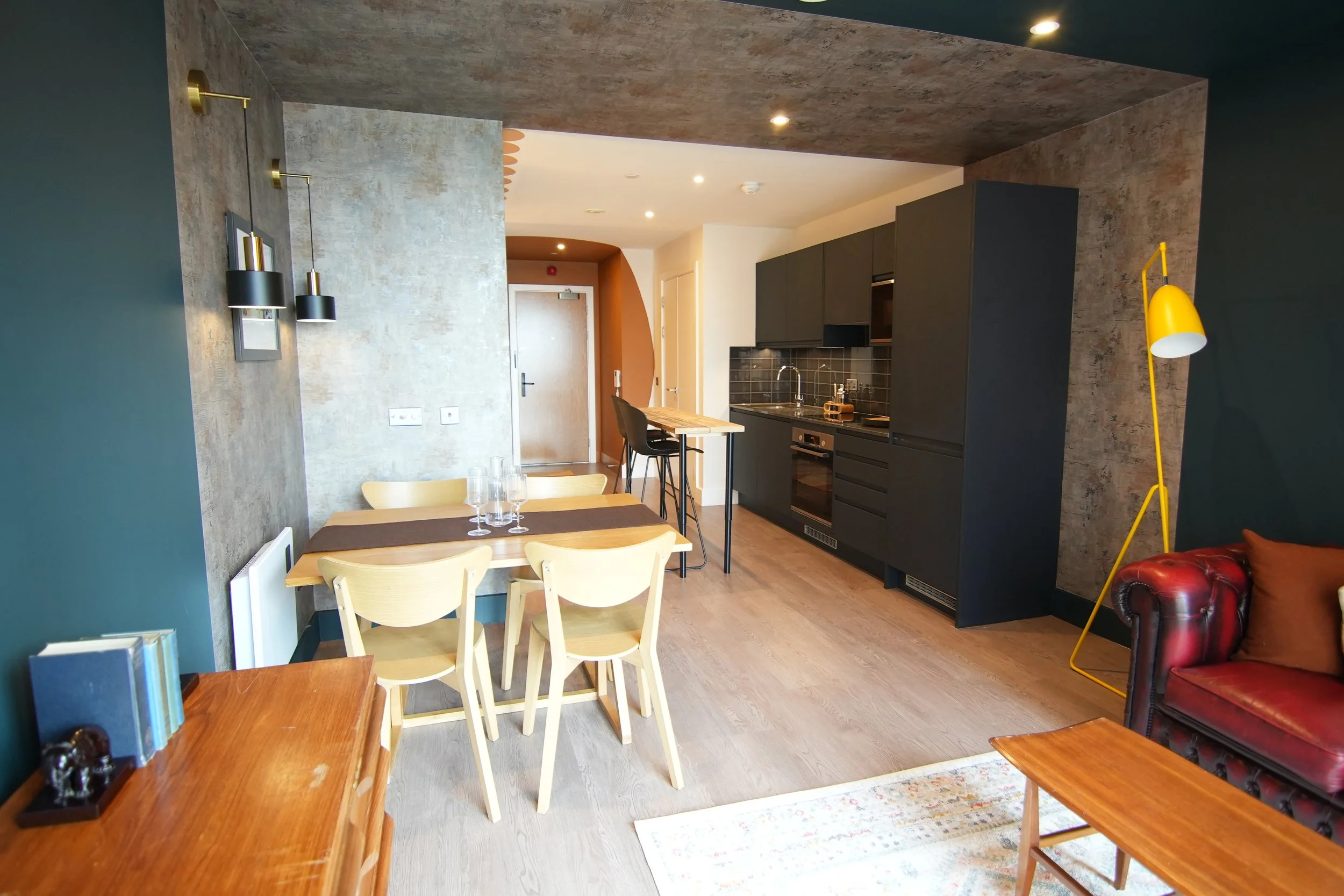
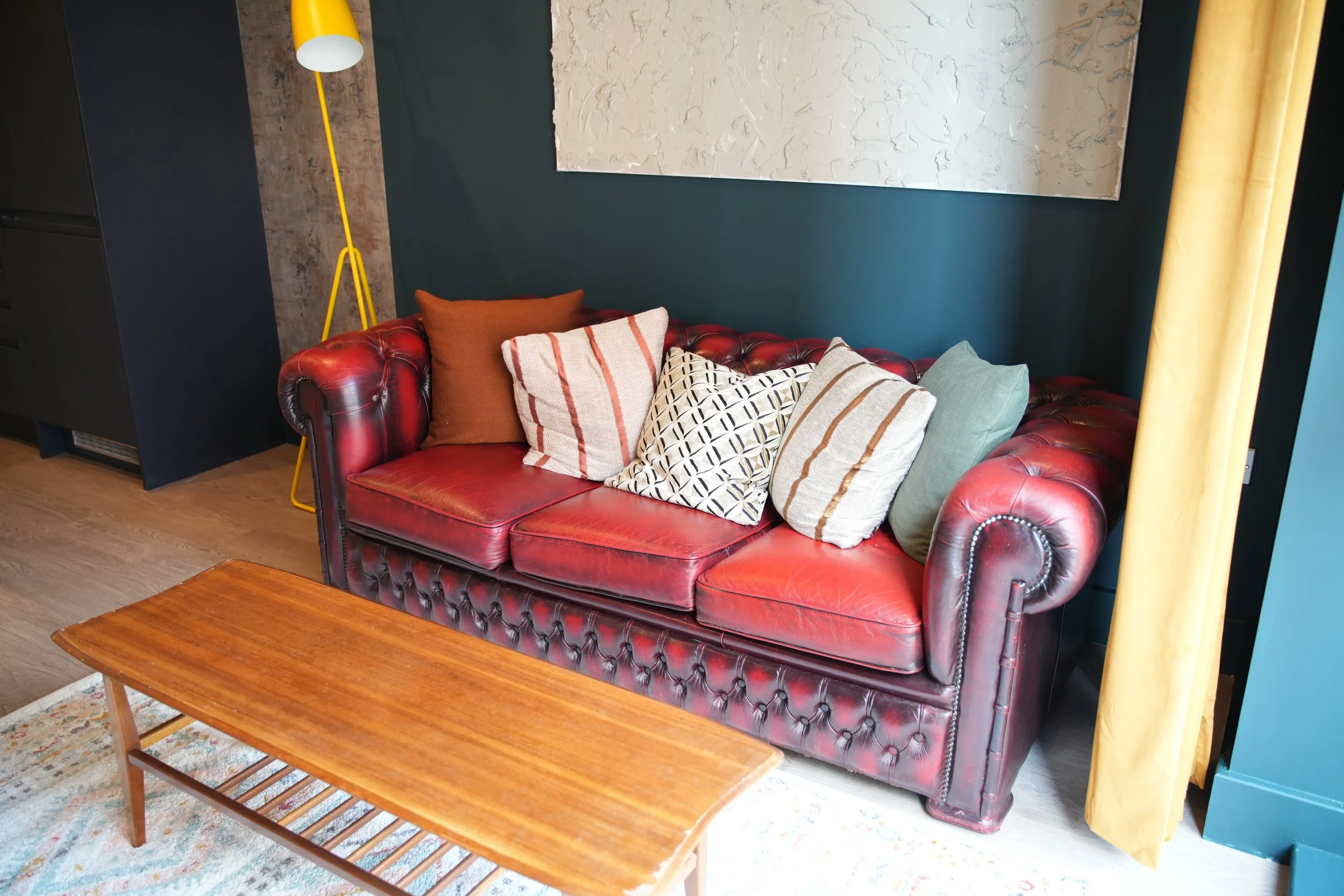
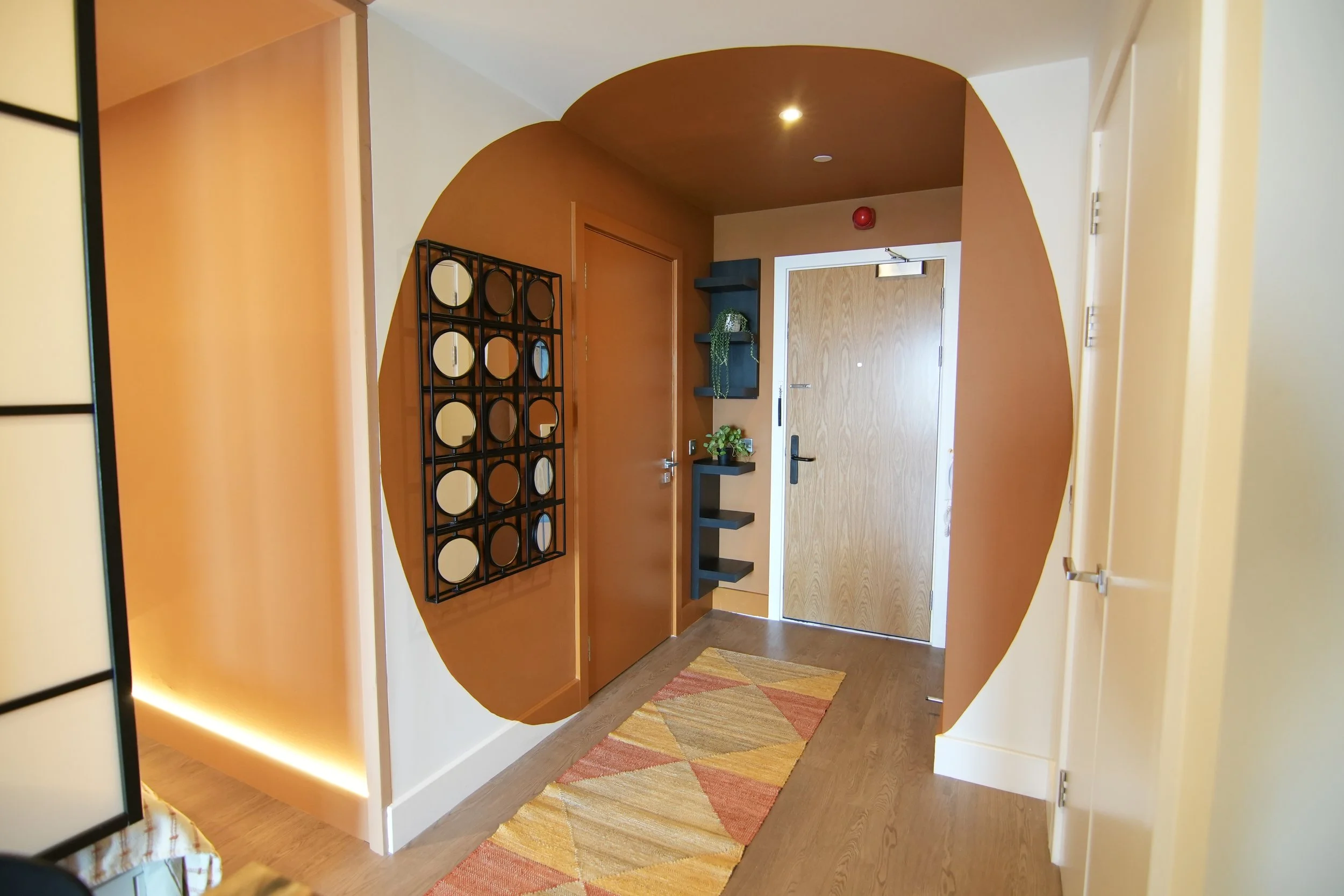
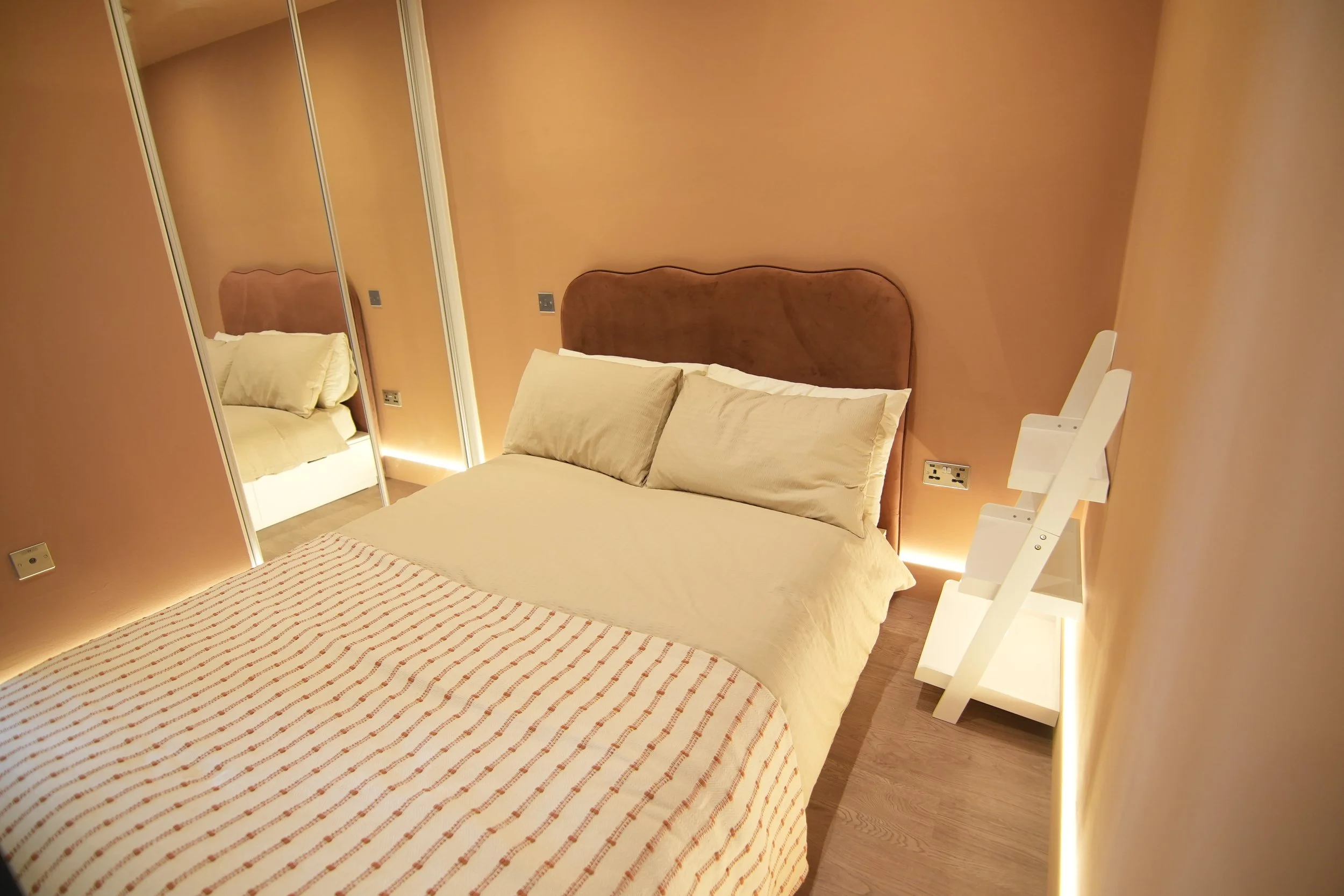
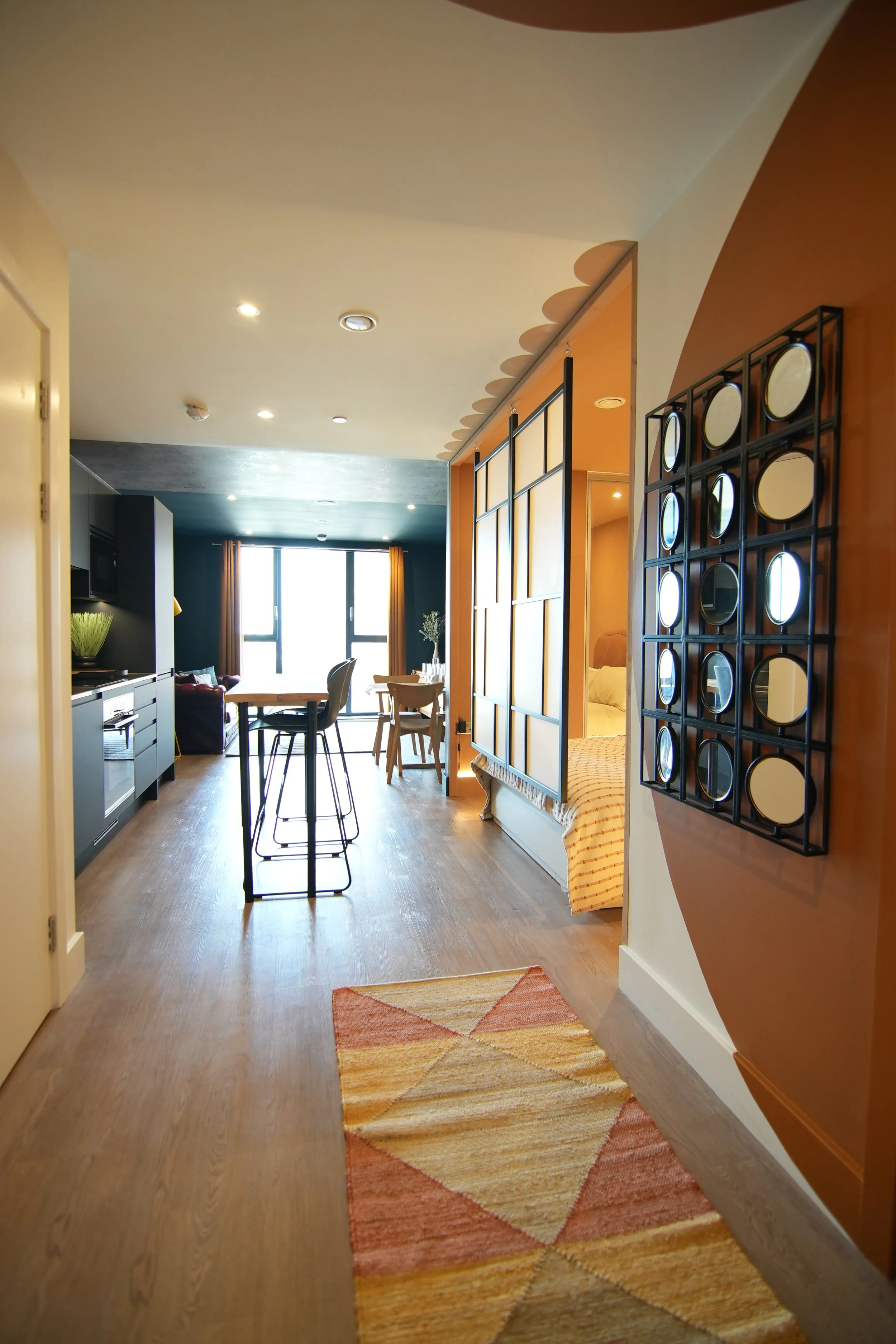
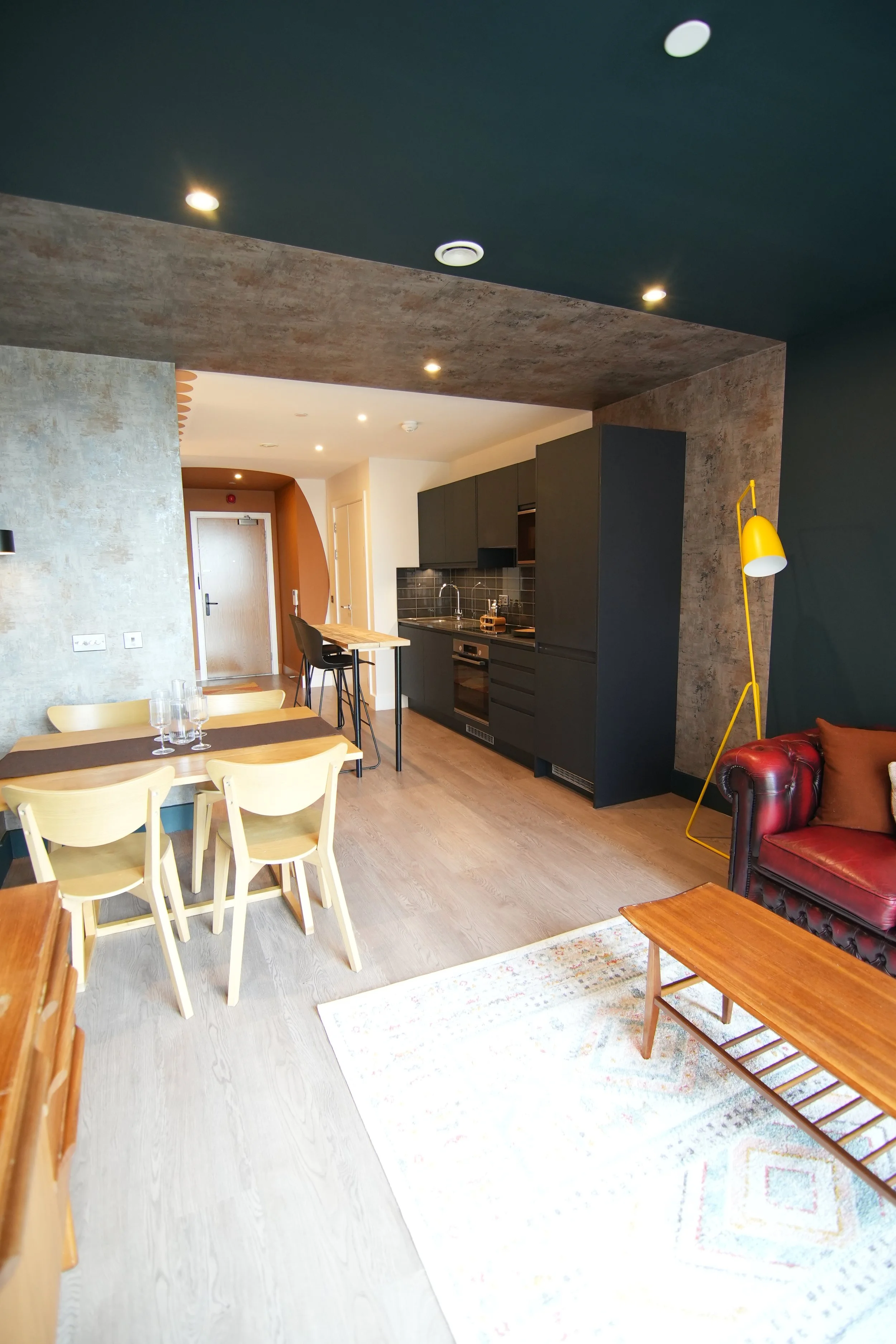
The apartment already contained a series of implied architectural zones, and rather than resisting those divisions, the design reinforced them through shifts in tone, texture, and furniture placement.
Distinct moments for:
sleeping
relaxing
dining
working
were created within the open-plan layout, allowing the apartment to feel more structured and intentional across the day.
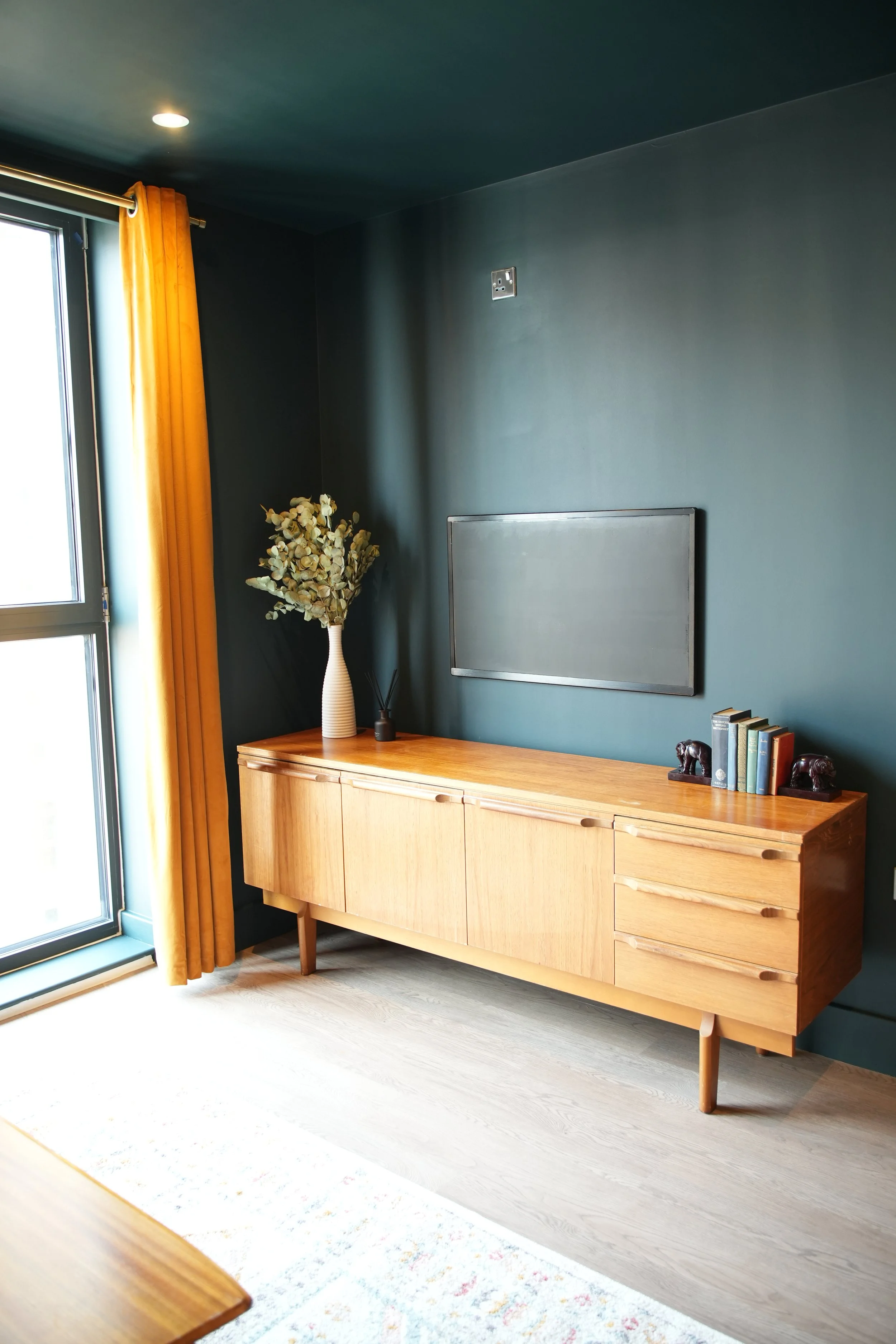
A scaffold-board kitchen island introduced a more social relationship between cooking and dining, while the living area was anchored by darker tonal layering and more substantial furniture pieces to create a stronger sense of grounding within the compact footprint.
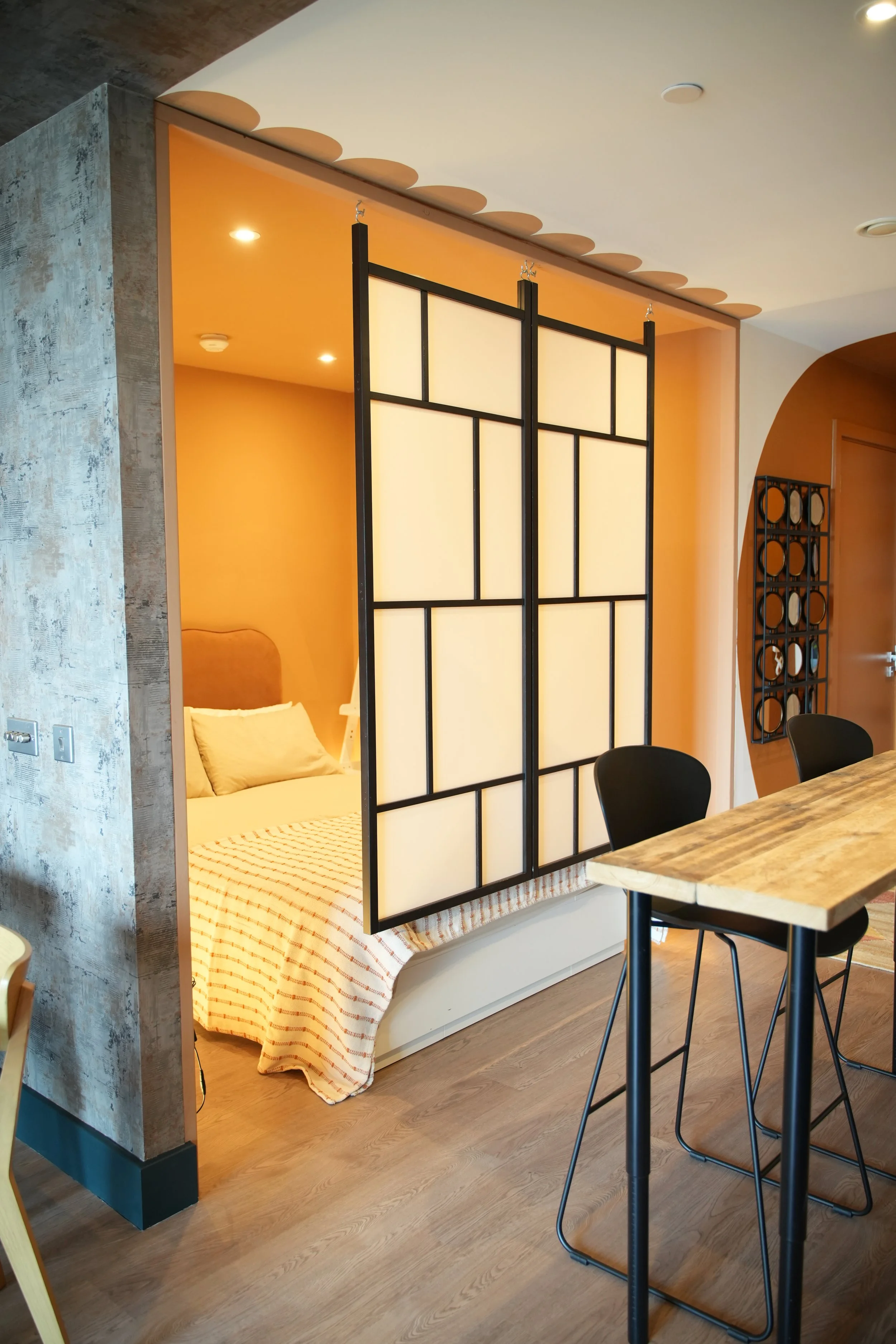
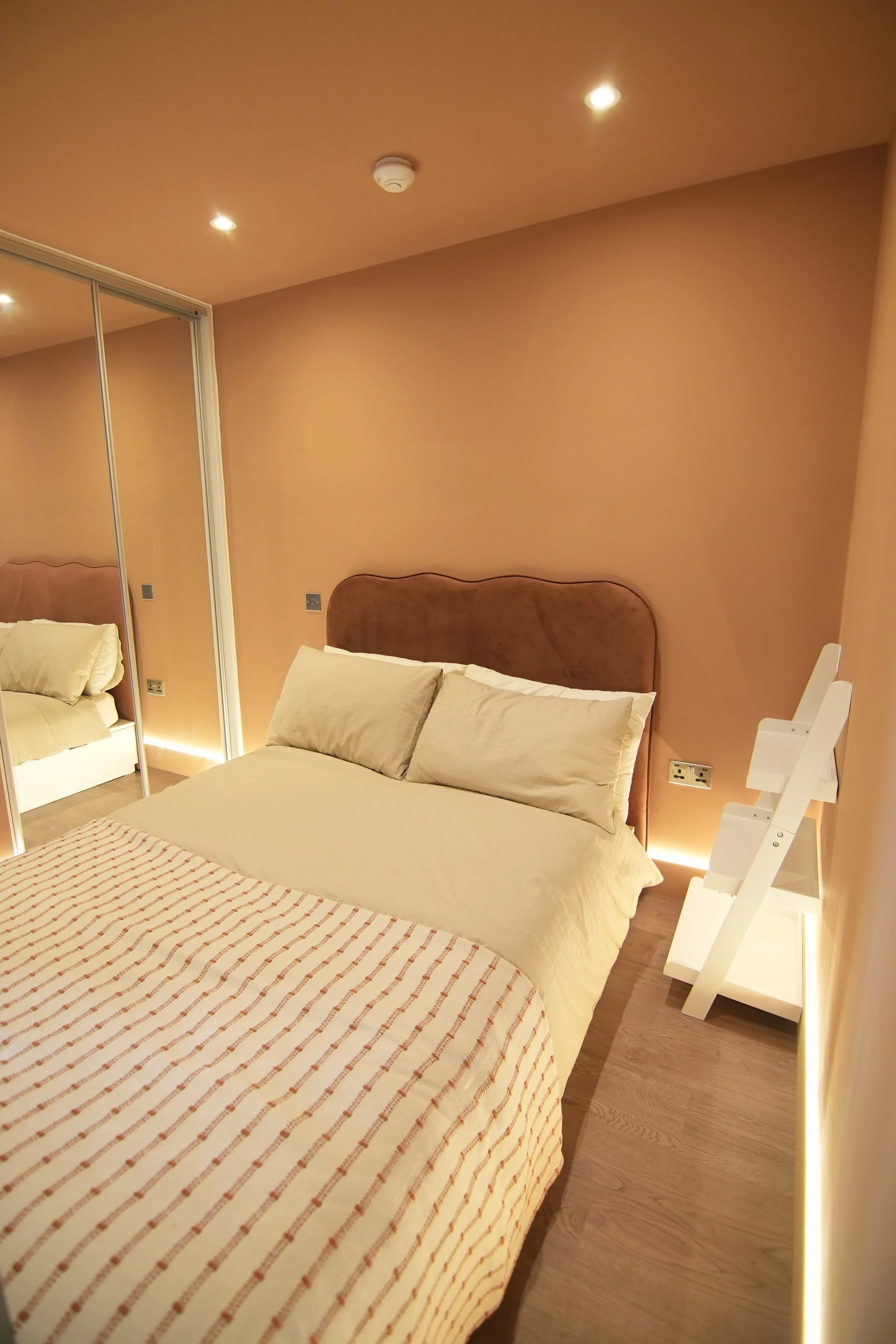
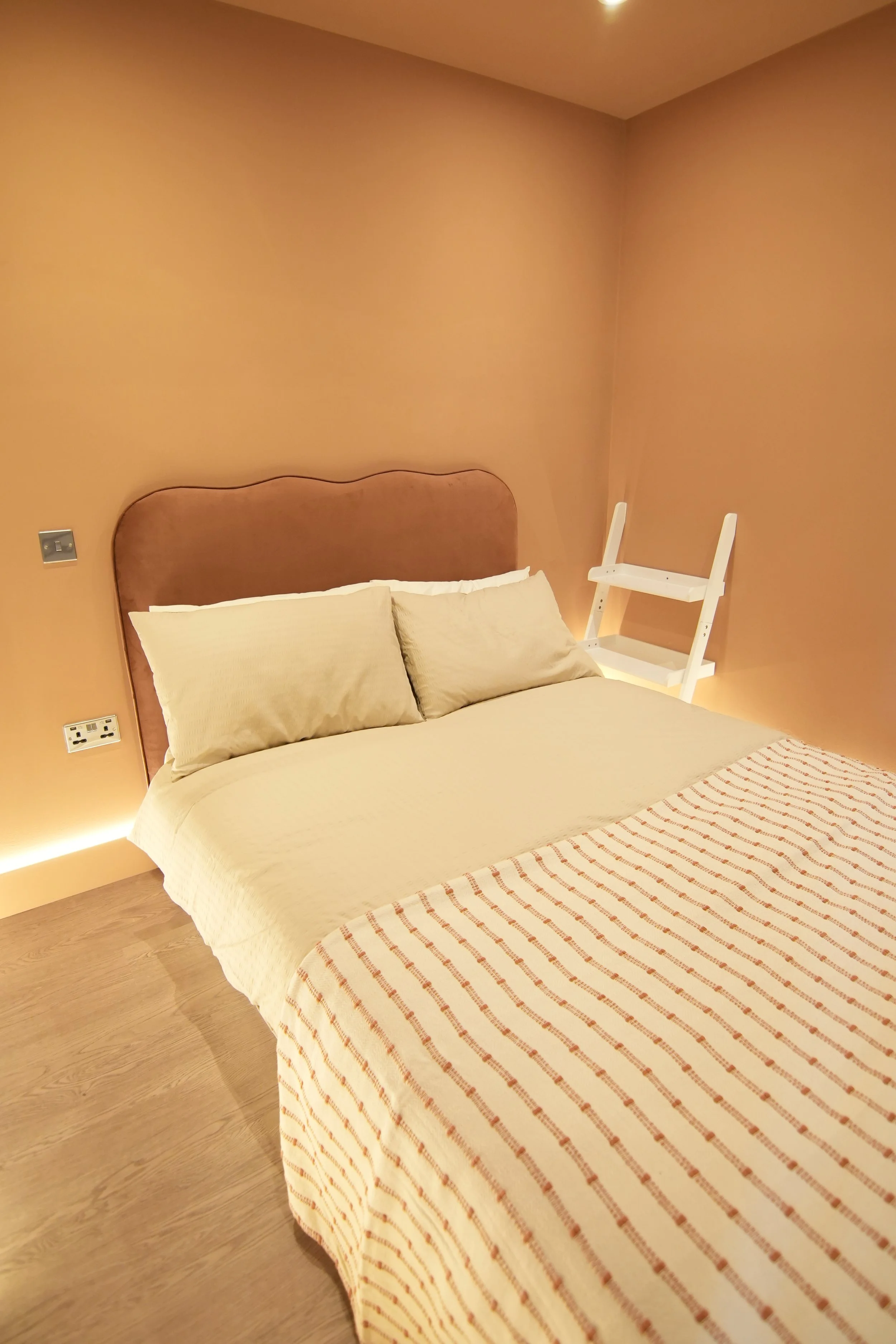
The sleeping alcove became one of the softer moments within the scheme.
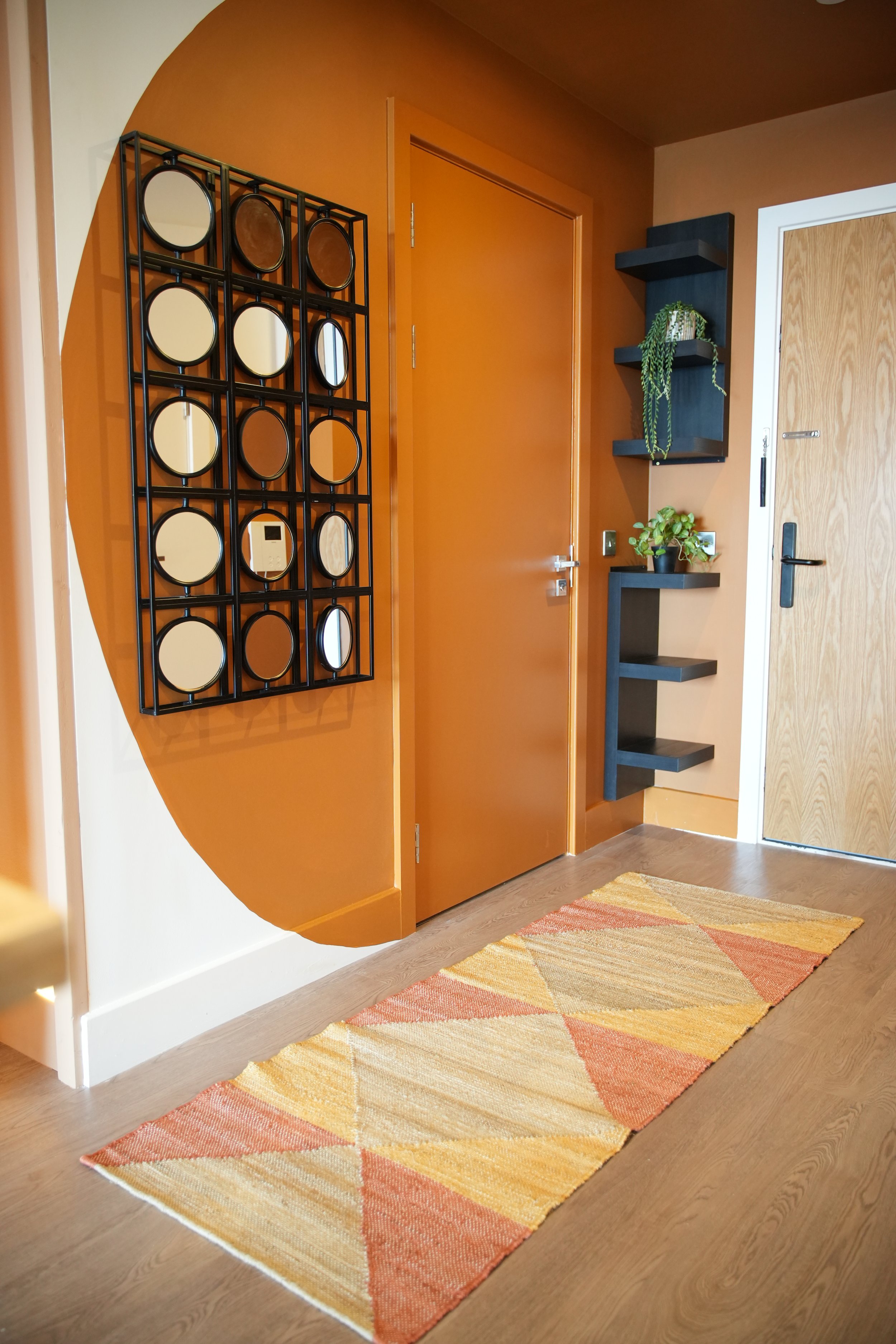
Rust-toned finishes, integrated lighting, curved detailing, and layered textures transformed the area into something more cocooning and immersive - balancing the sharper lines and darker finishes elsewhere in the apartment.
Styling became central to the project’s overall atmosphere.
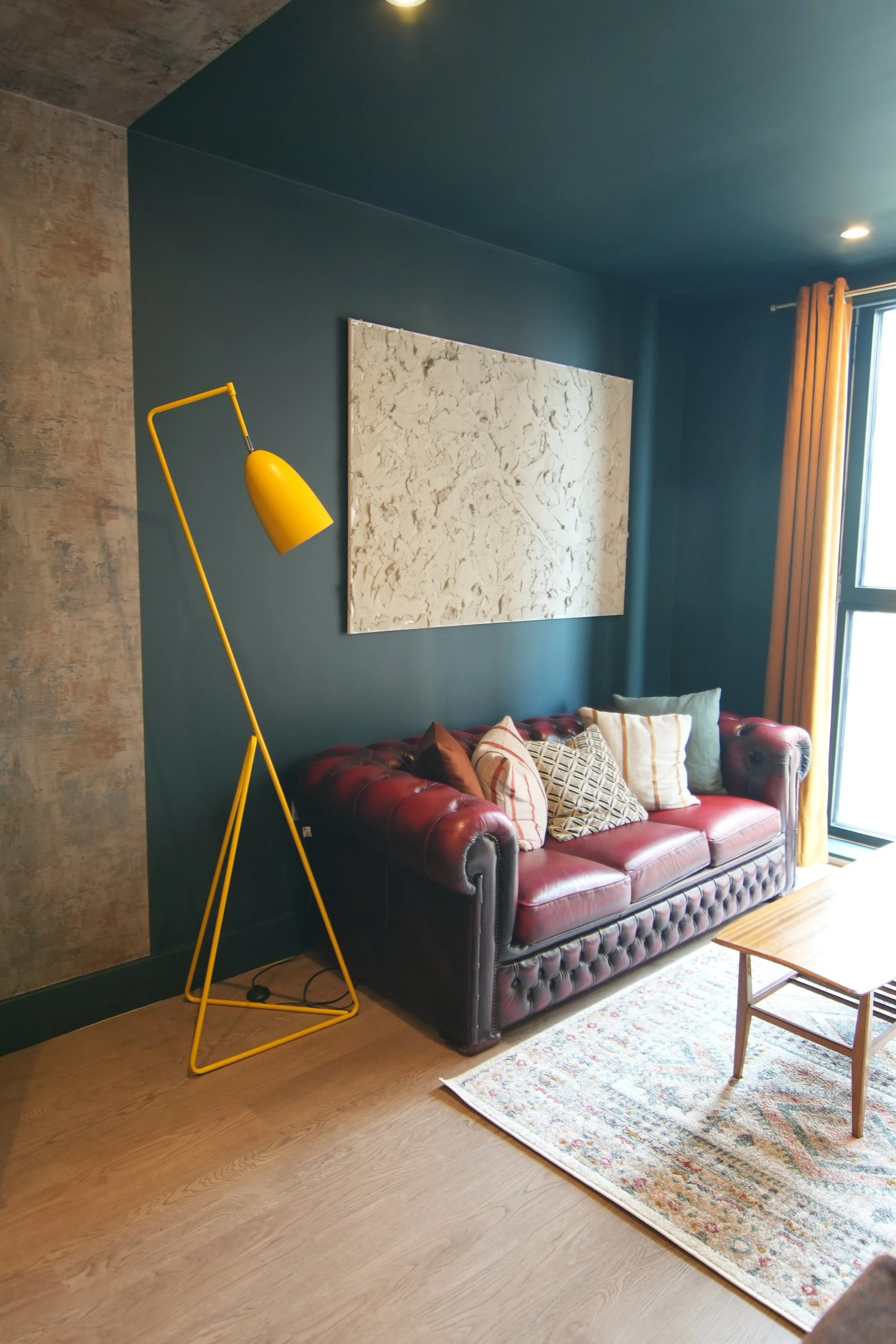
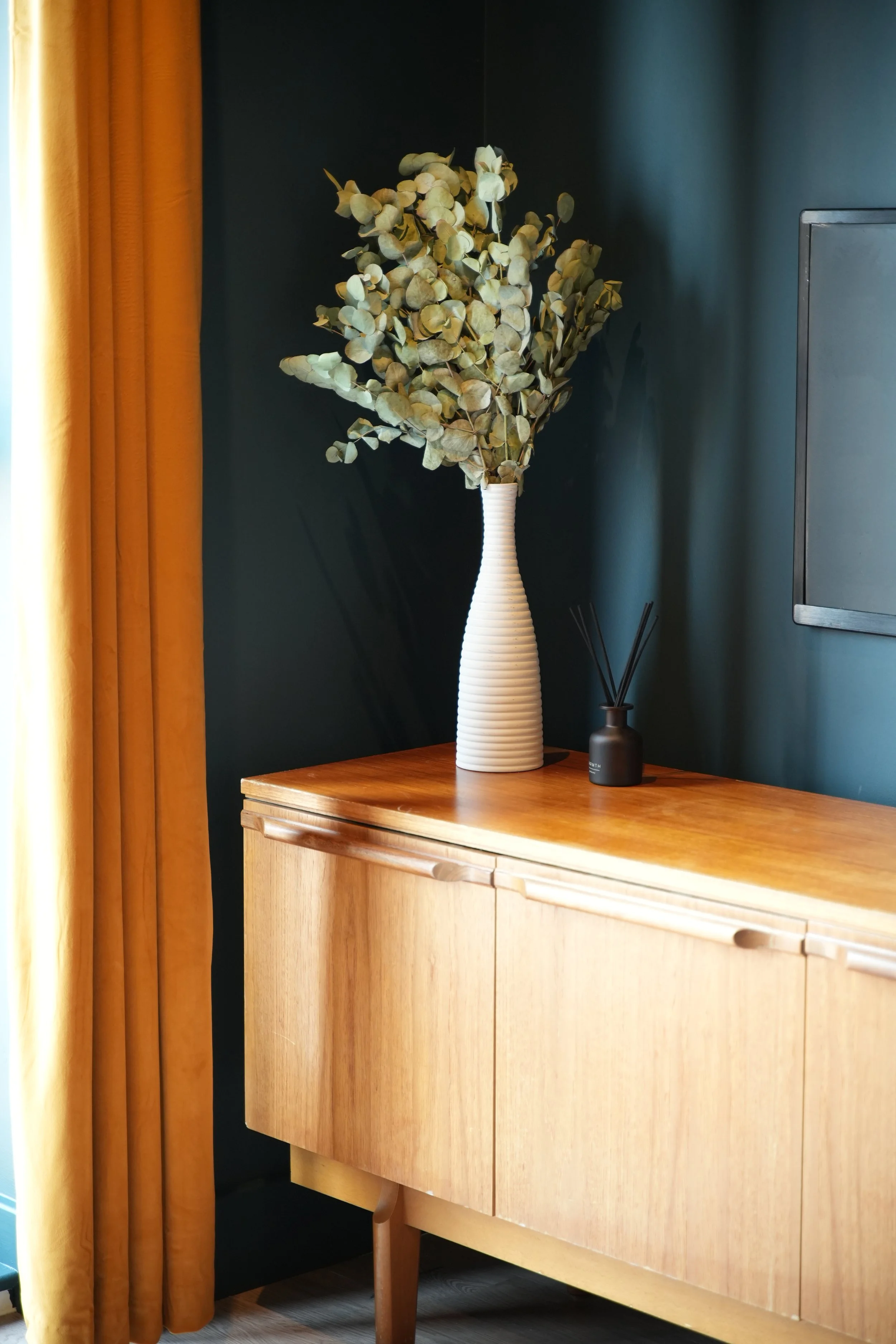
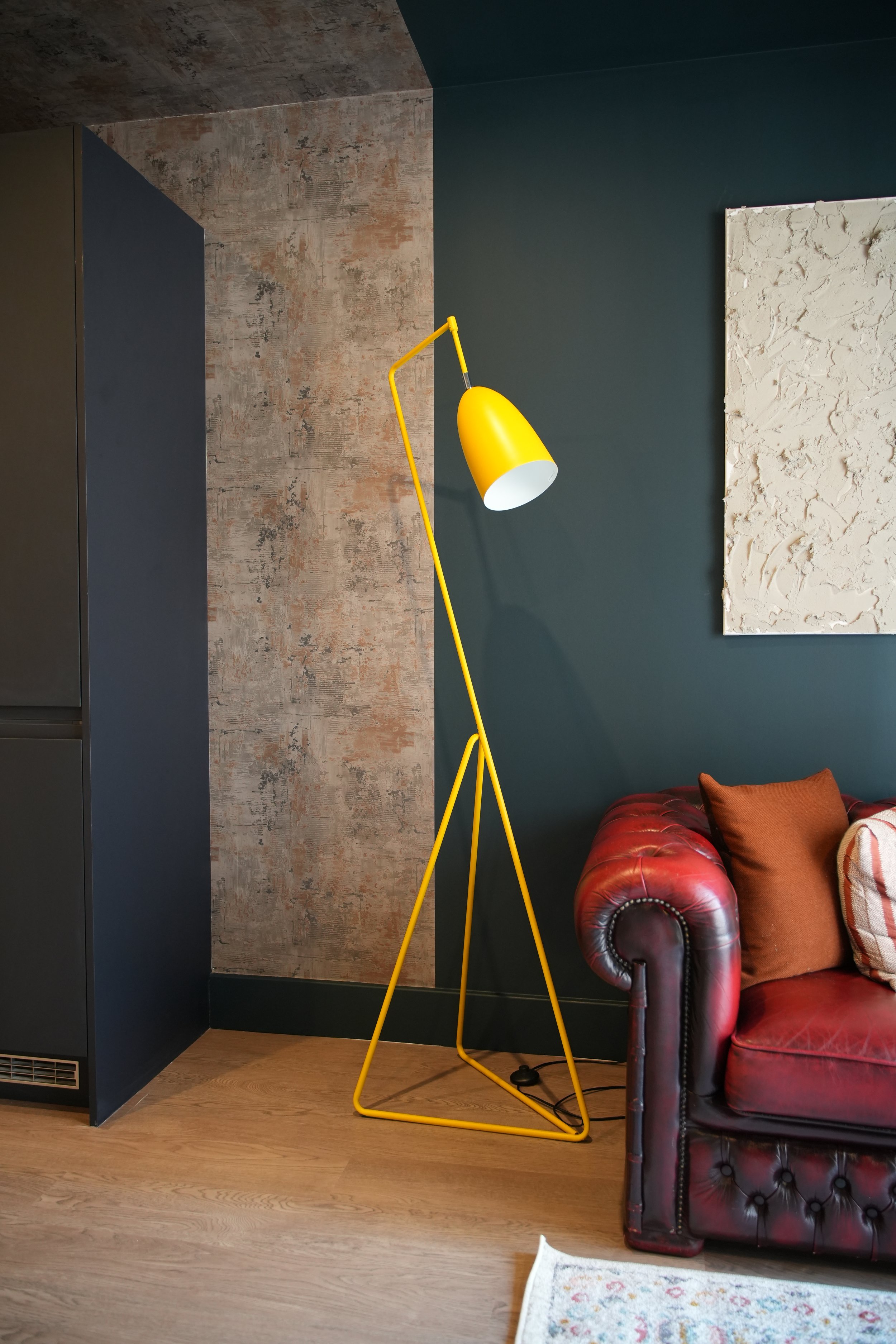
Rather than acting as a decorative finishing layer, furniture, artwork, textiles, and lighting were treated as active architectural elements within the apartment — shaping how the space feels emotionally as much as visually.
The material palette combined:
teak tones
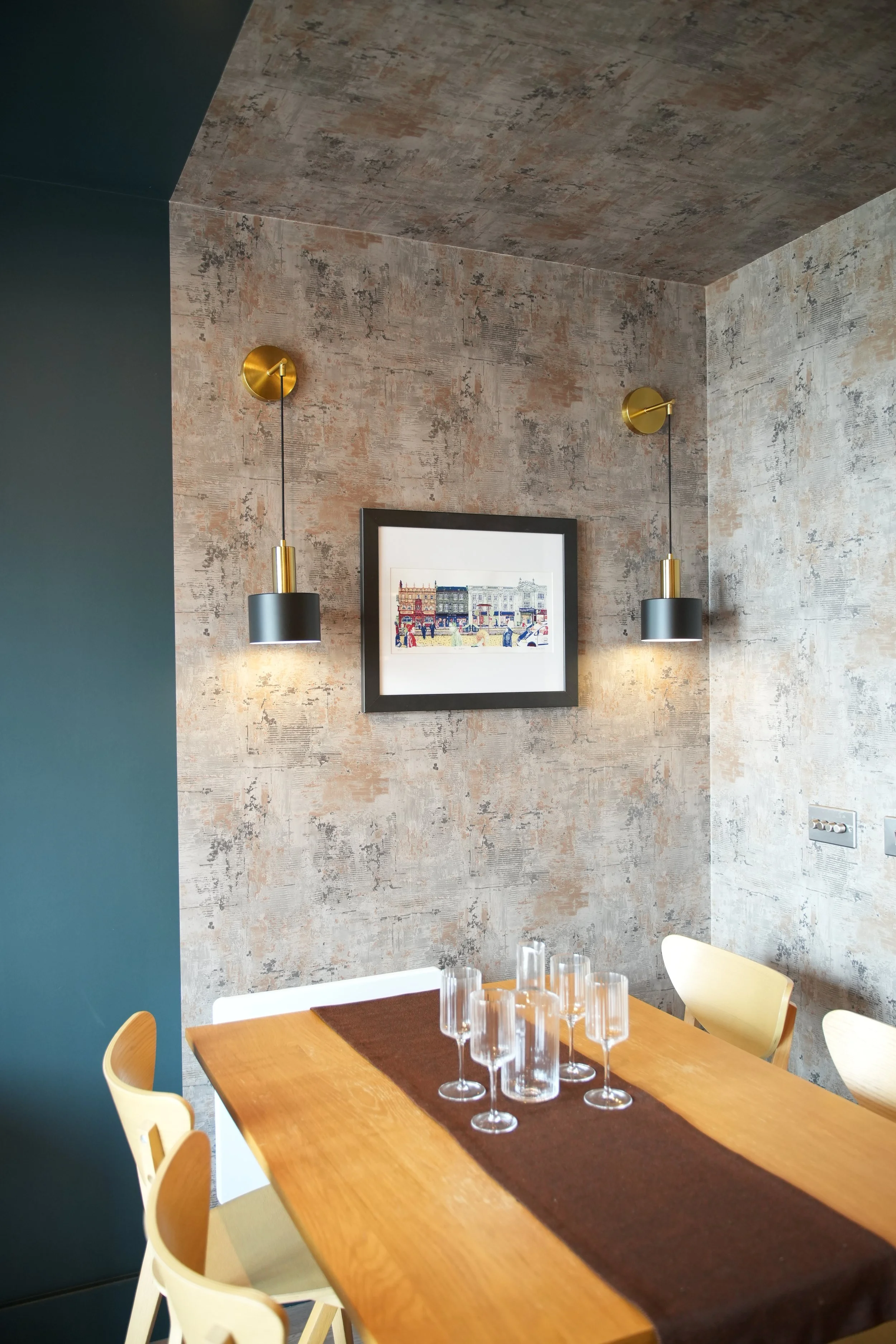
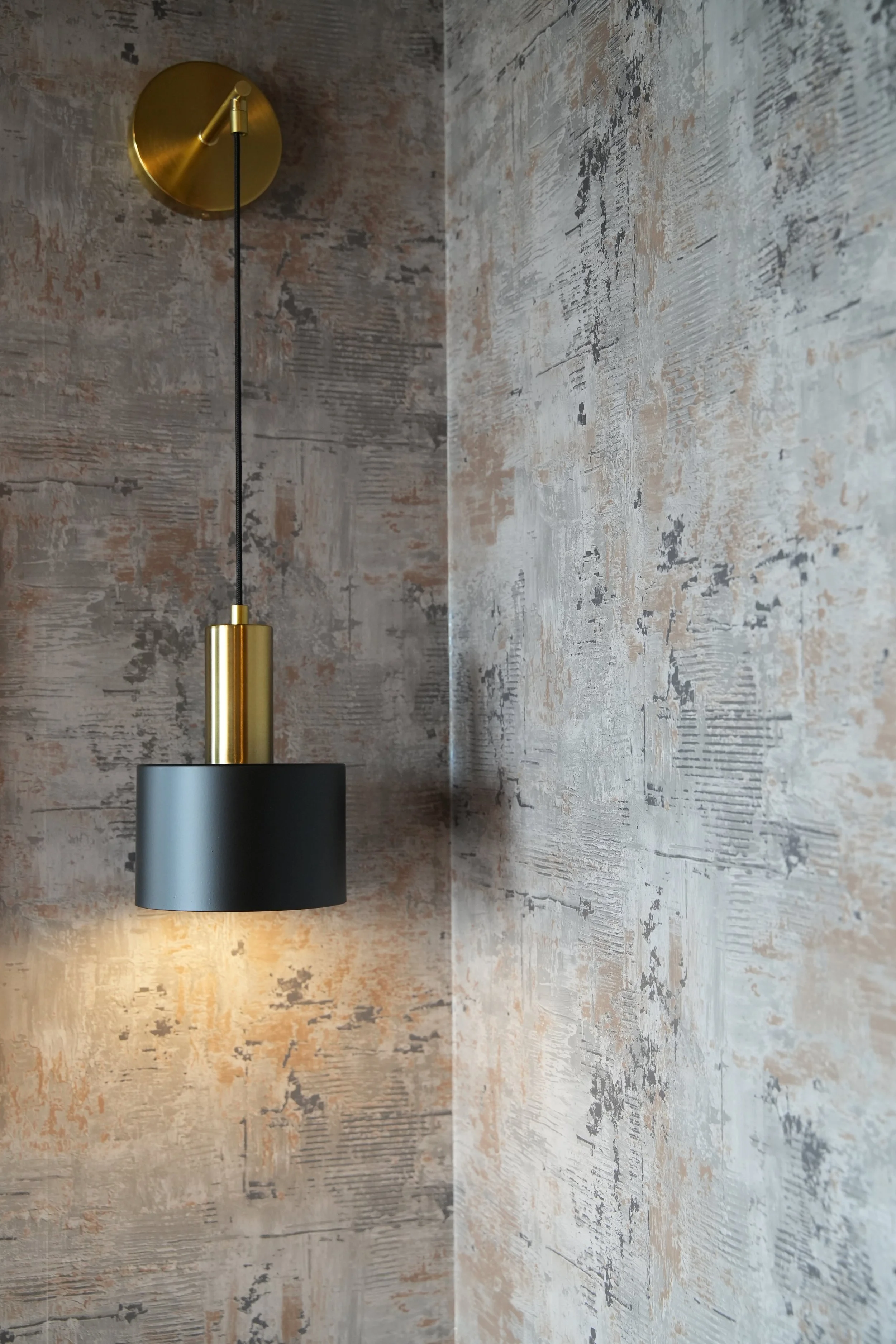
textured wallpapers
industrial textures
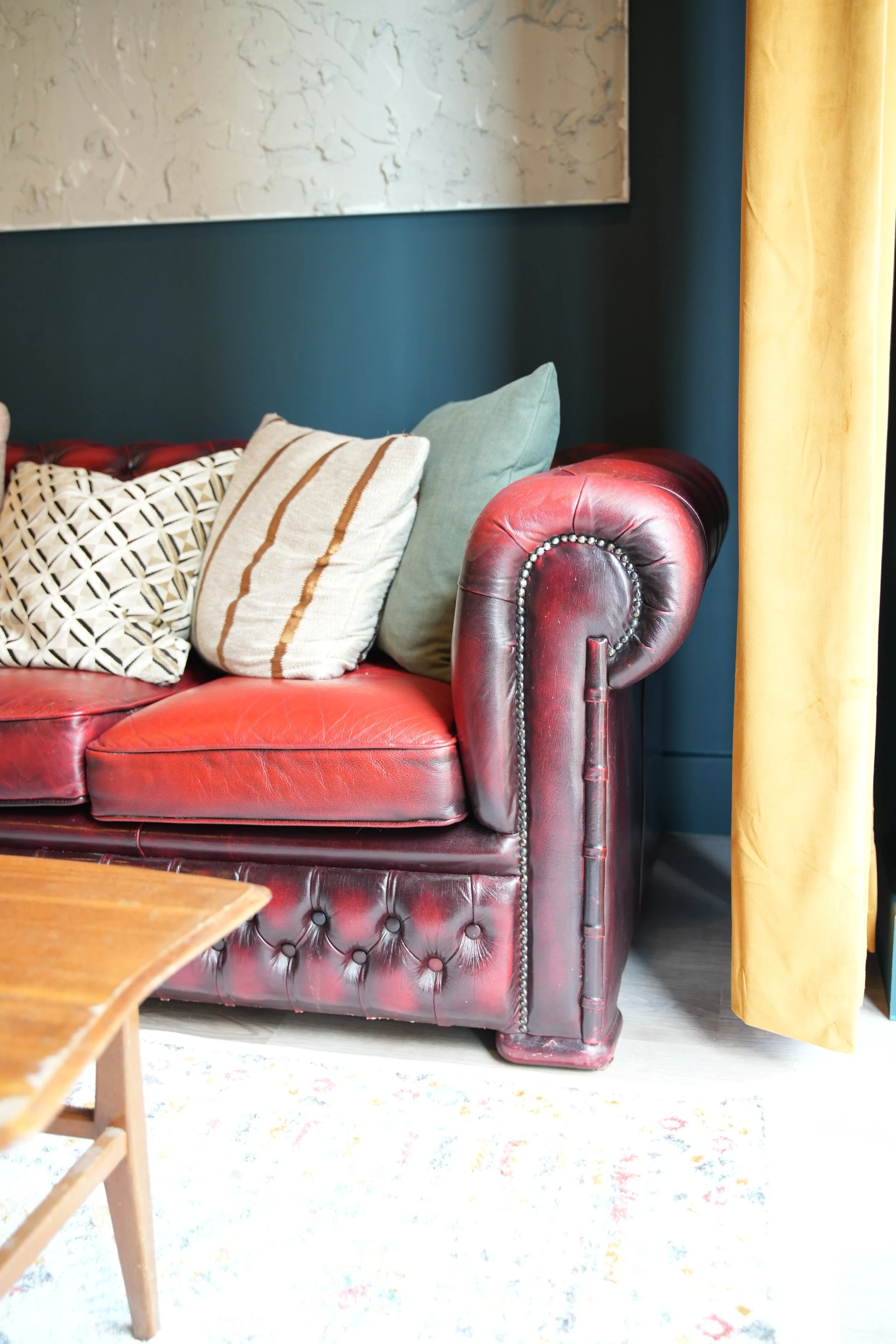
leather references
suede and velvet fabrics
warmer rust and terracotta colours
to create a space that feels layered, tactile, and emotionally grounded.
Lighting intentionally moved away from brightness and uniformity. Instead, softer ambient lighting, wall sconces, tonal contrast, and shadow were used to create a more intimate and cinematic atmosphere throughout the apartment.