Mudeford
A Modern Seaside Retreat
Project Timeline: 1 week designing and sourcing, 2 day build
Interior Design Masters Challenge 1: View Episode
Completed
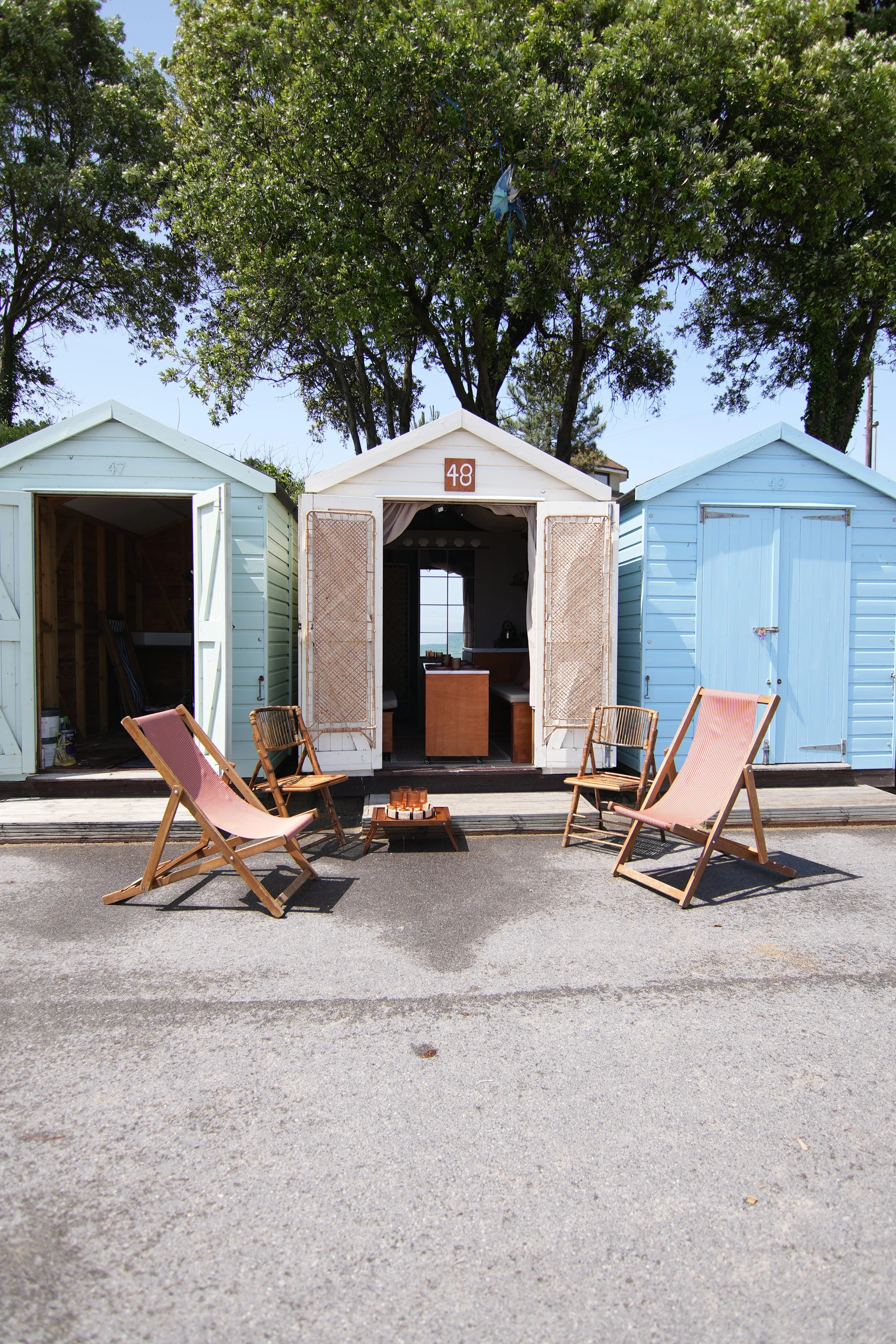
There’s something distinctly familiar about a British beach hut.
A place to arrive, to change, to gather, and to retreat from the wind or the rain. For many, these spaces are tied to memory—particularly in the post-war era, when seaside holidays became more accessible and routines were shaped by simplicity, proximity, and practicality.
This project began there.
My signature style of Modern Nostalgia sits between memory and modern living. It begins with history: the history of a place, a cultural moment, or the people who shaped it. Here, that research led to a 1957 BBC Archive film called The Big Gamble - a documentary exploring the rising popularity of British beach holidays in the post-war years. At a time when international travel was largely out of reach, the British seaside became the destination of choice. Simple, affordable, and shared.
That era shaped not just what the beach hut became, but who it was for. And that question became the starting point for this design.
How might a beach hut feel if it were designed for today?
The answer pointed toward a specific kind of person. Not the post-war family for whom the beach hut was a modest necessity, but their natural successor - someone who carries a quiet familiarity with the British seaside, who has travelled, experienced different standards of comfort, and now expects even the most compact space to feel considered and purposeful. Designing for that person meant resisting the temptation to recreate the aesthetic of the past, and instead asking what that aesthetic needs to become.
“I feel comfortable, and relaxed.”
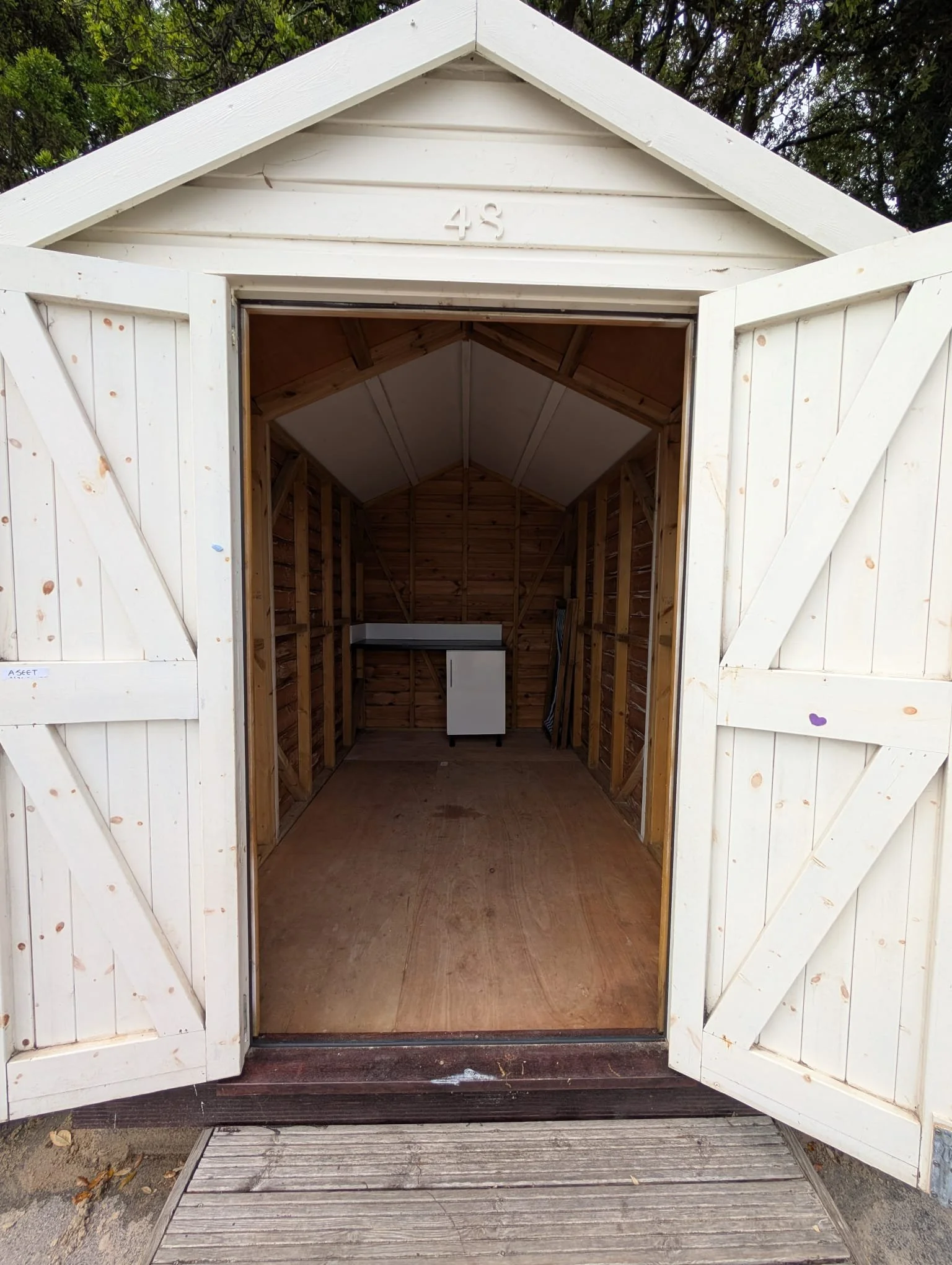
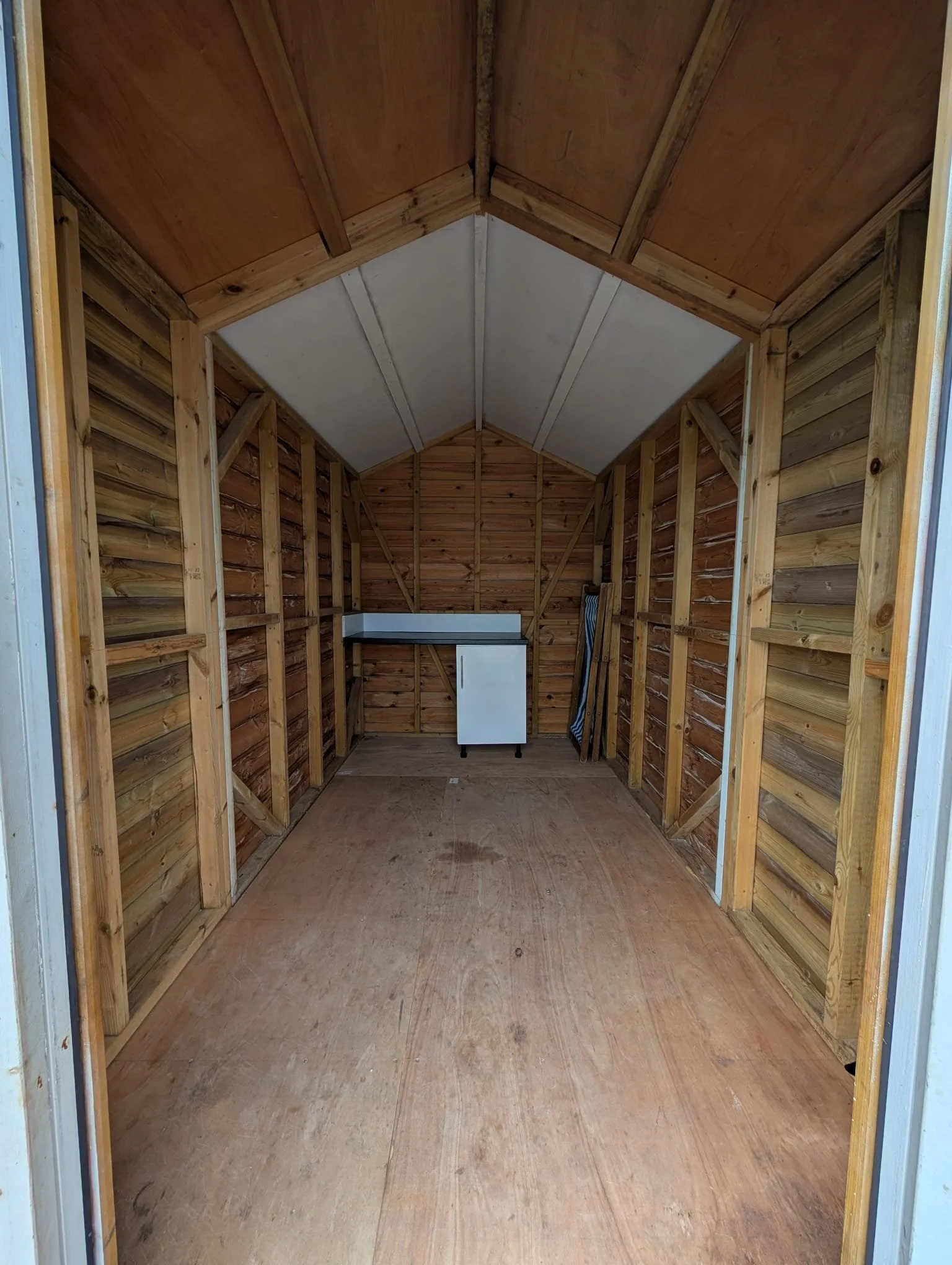
Working within a footprint of just 3.4 by 2 metres, the constraints of the space were immediately clear. Every element needed to justify its presence - not just aesthetically, but functionally.
Instead of treating the hut as a single-use room, the design considers how the space shifts over the course of a day. Arrival, changing, preparing food, sitting together, packing away - each moment placing a different demand on the same footprint.
What emerged was an approach centred on adaptability.
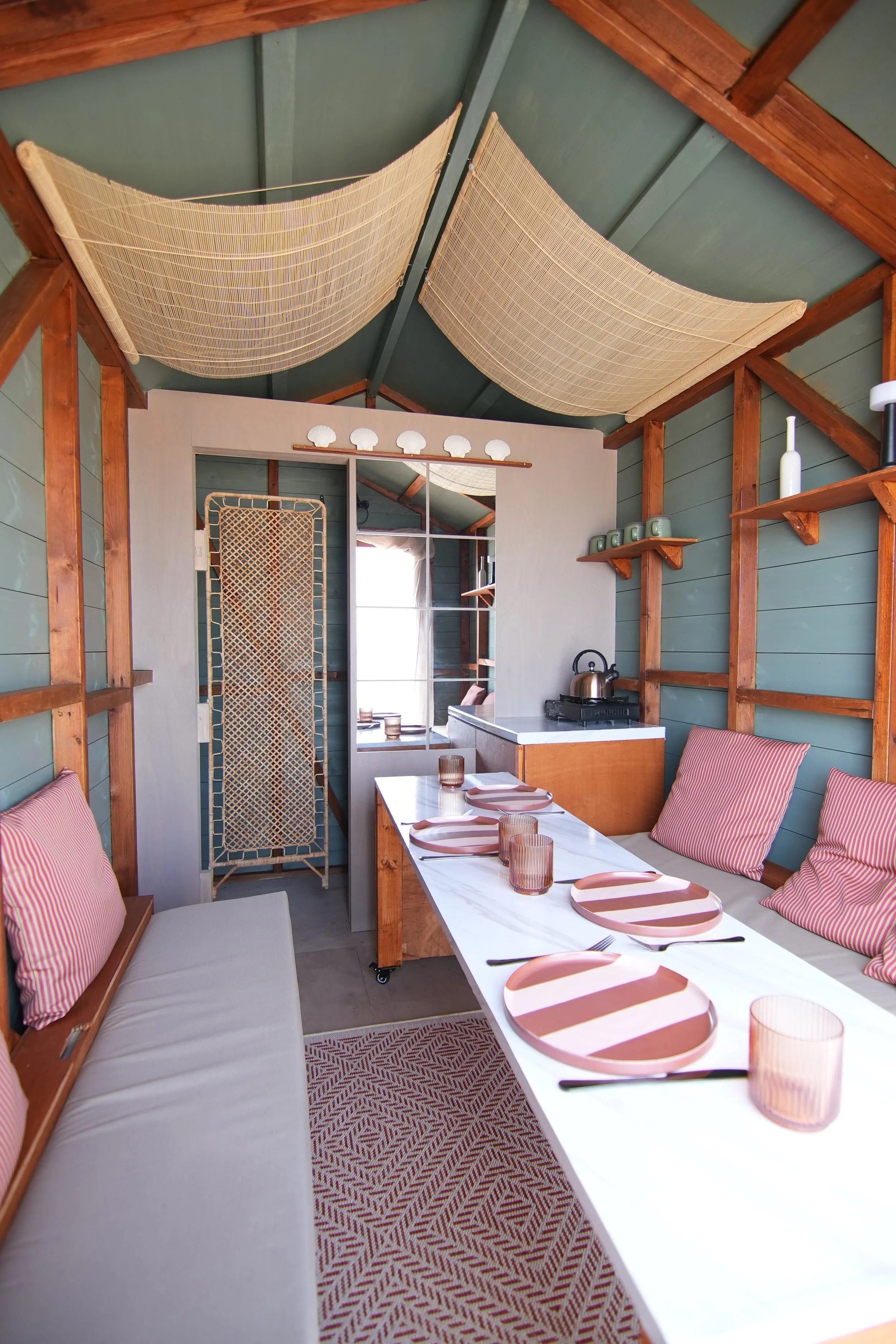
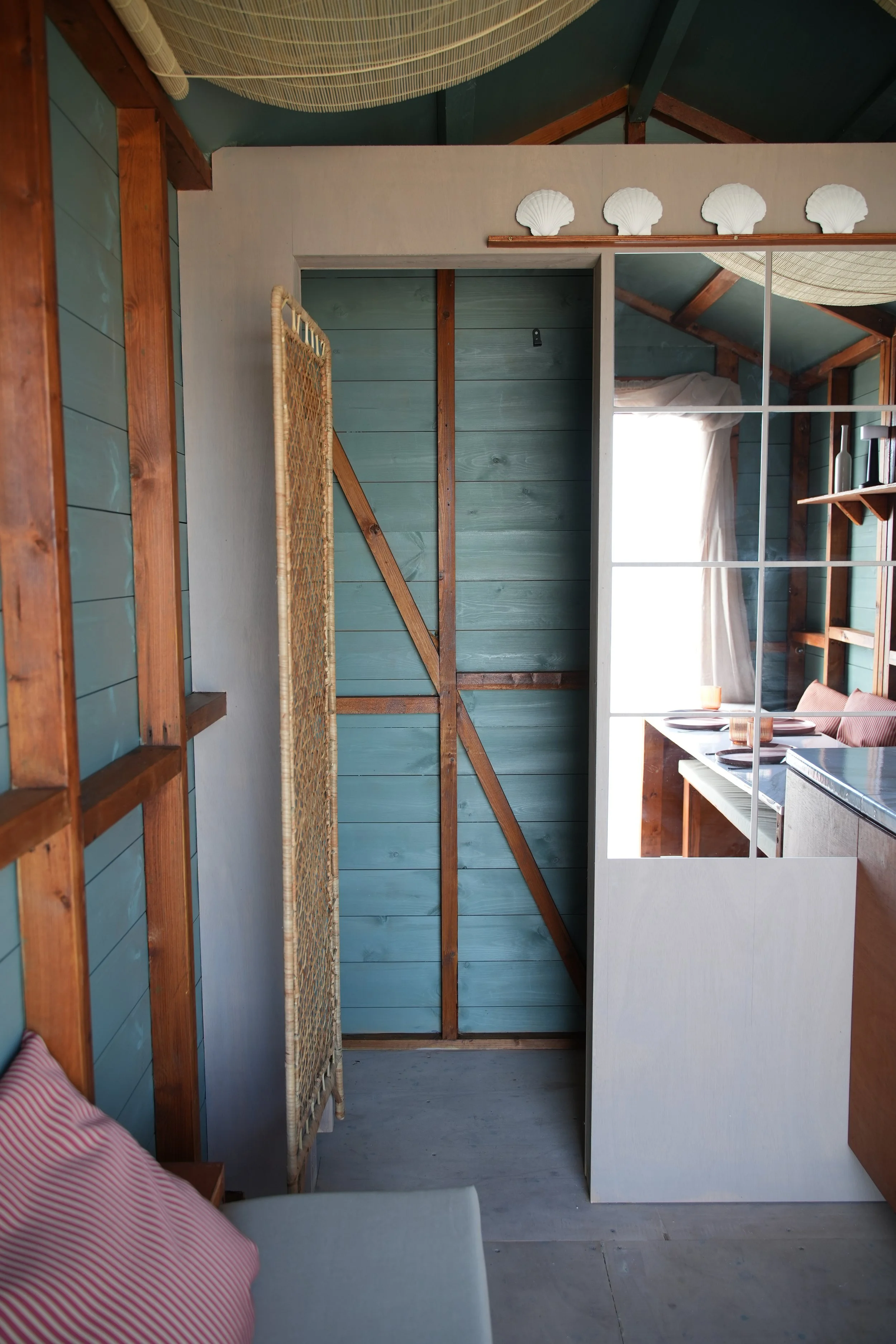
To support this, the layout is organised into two simple zones: a more open, social area at the front, and a more private space to the rear for changing and storage. A partial partition introduces separation without closing the space down, allowing light and movement to continue through.
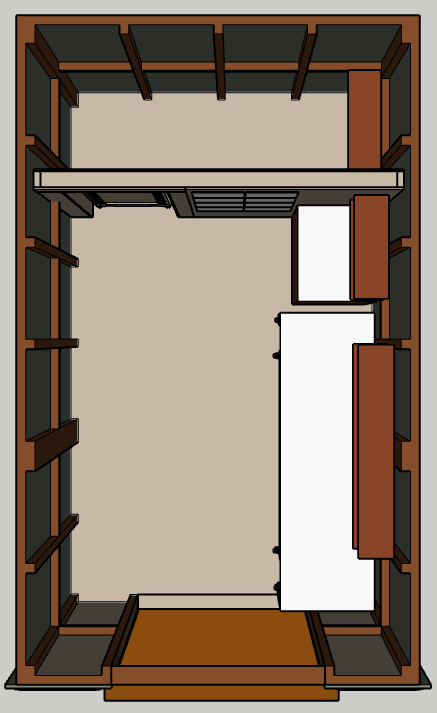
Configuration when furniture is compacted
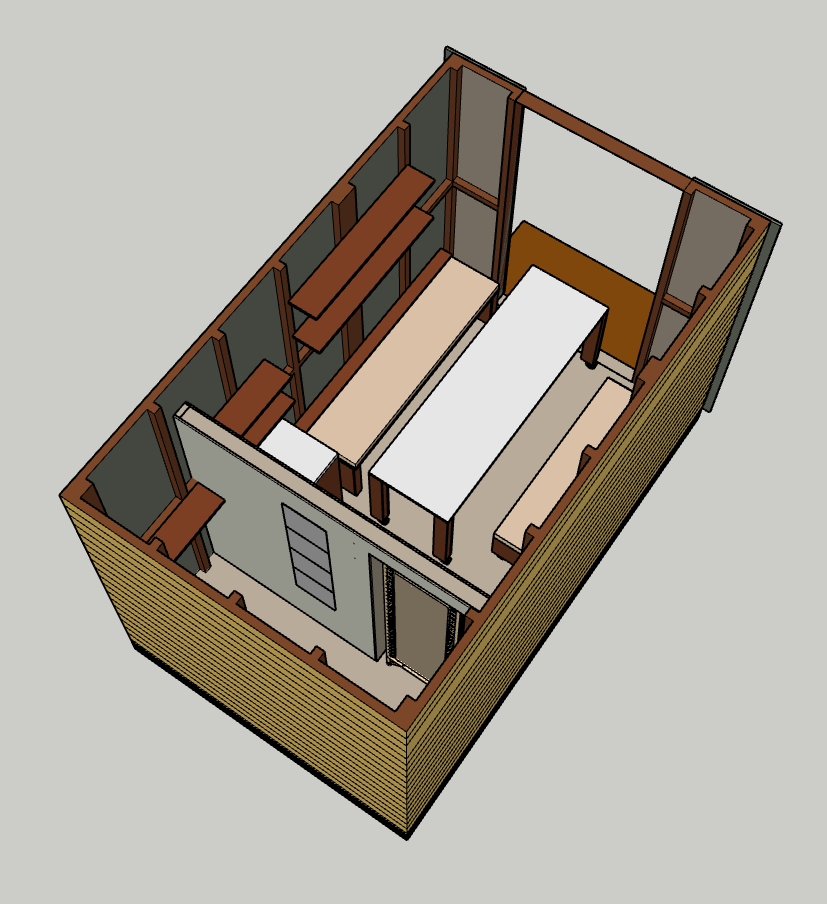
Overview of the whole beach hut outlining a dressing area in the back with a partial-height partition to allow natural light in
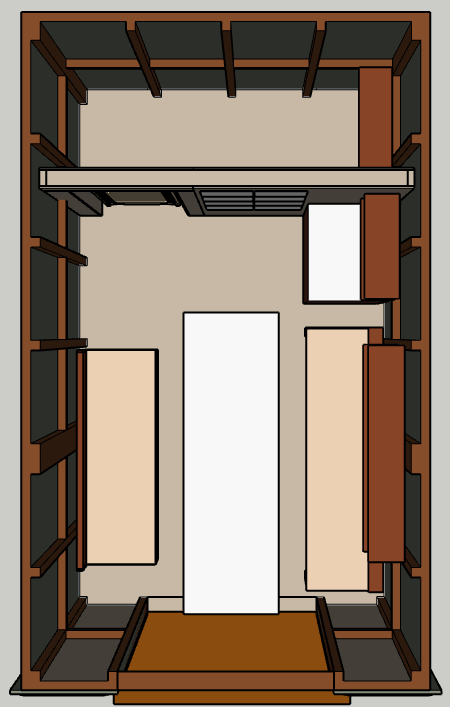
Configuration with all furniture out in use
The furniture follows the same principle.
Rather than fixed arrangements, the design relies on elements that can move and adjust as needed. A built-in bench provides a constant, while a secondary trundle seat can be pulled out or tucked away. A table shifts position depending on use - supporting preparation, dining, or simply clearing space when needed.
It’s a quieter kind of flexibility - one that doesn’t draw attention to itself, but allows the space to feel more generous than its size might suggest.
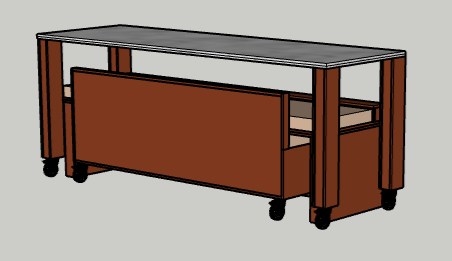
The original drawings for the primary furniture pieces. A fixed bench supports a trundle seat with storage to fit underneath, while a long table on castors acts as both a dining and kitchen prep surface that slides over the bench
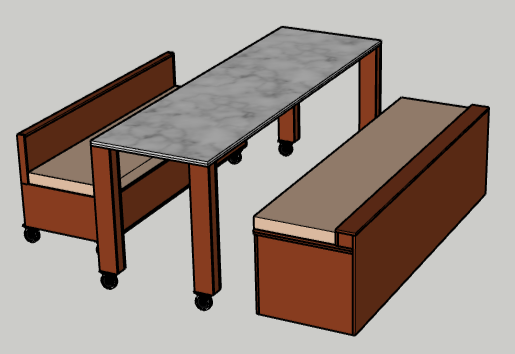
SketchUp formed a key part of the design process, allowing the beach hut to be developed as a complete spatial study before build.
The model was used to resolve layout, test multi-functional furniture, and refine how the space would adapt across different uses.
It also provided a framework to explore colour, material, and light - ensuring the final space felt cohesive, considered, and grounded in how it would actually be experienced.
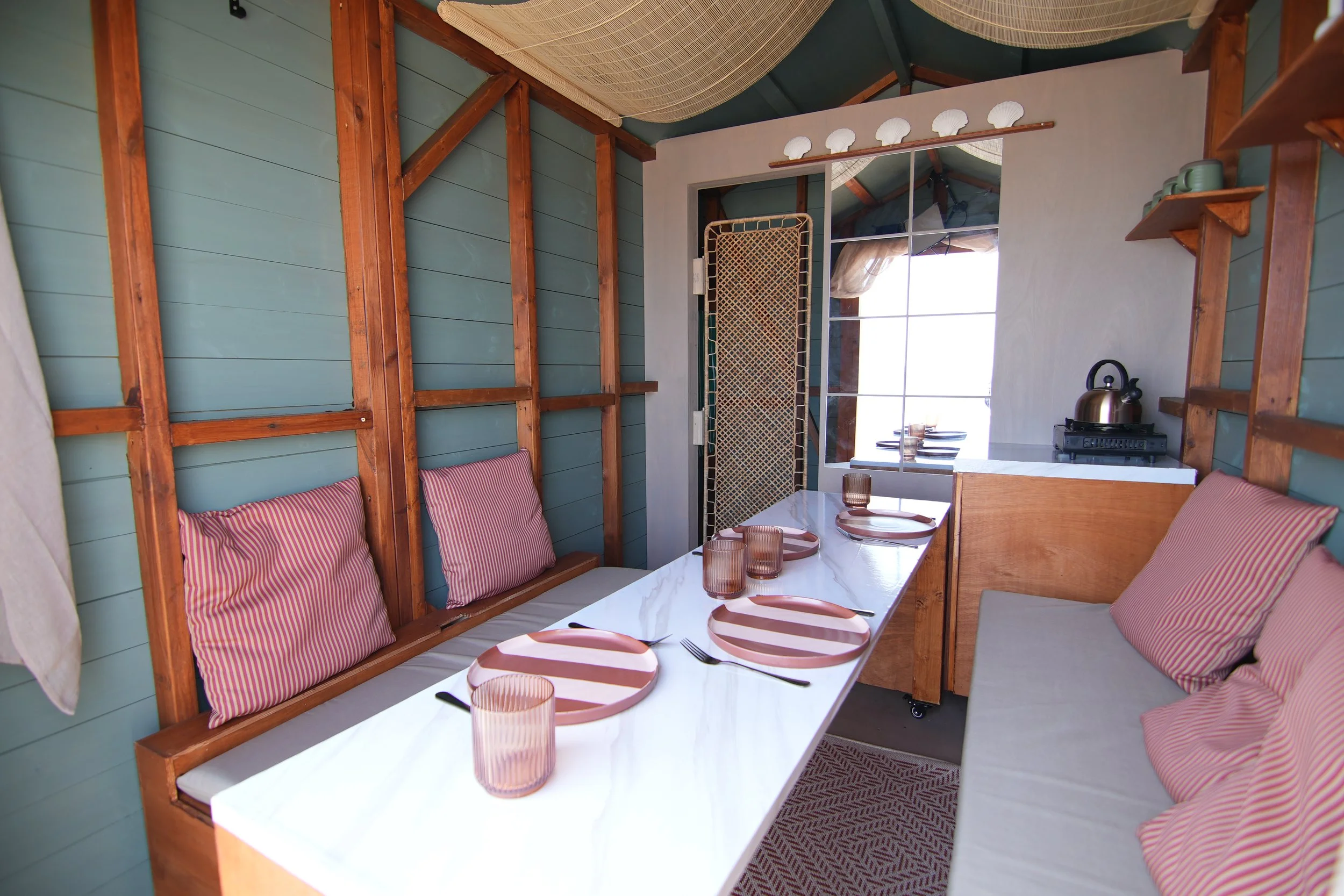
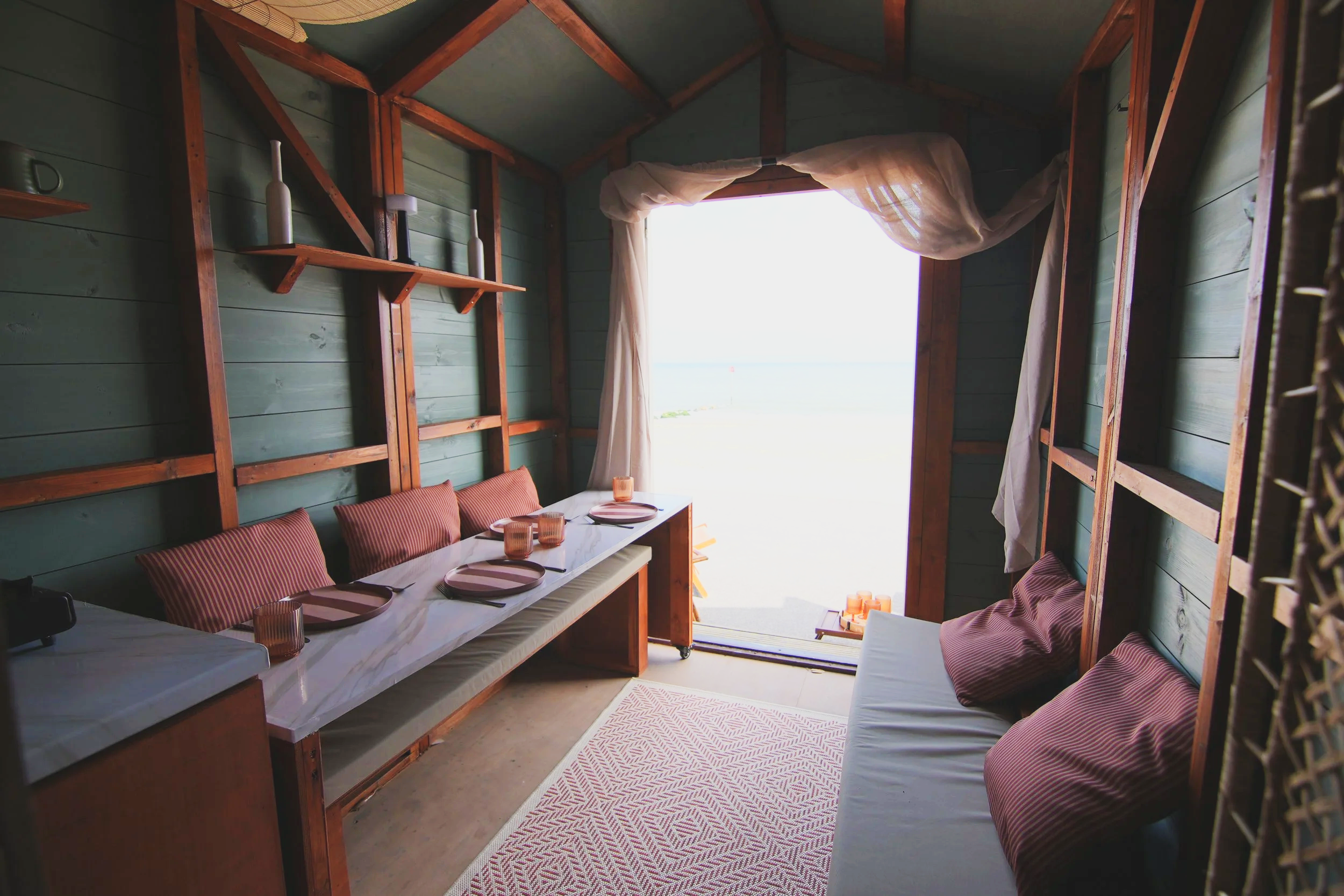
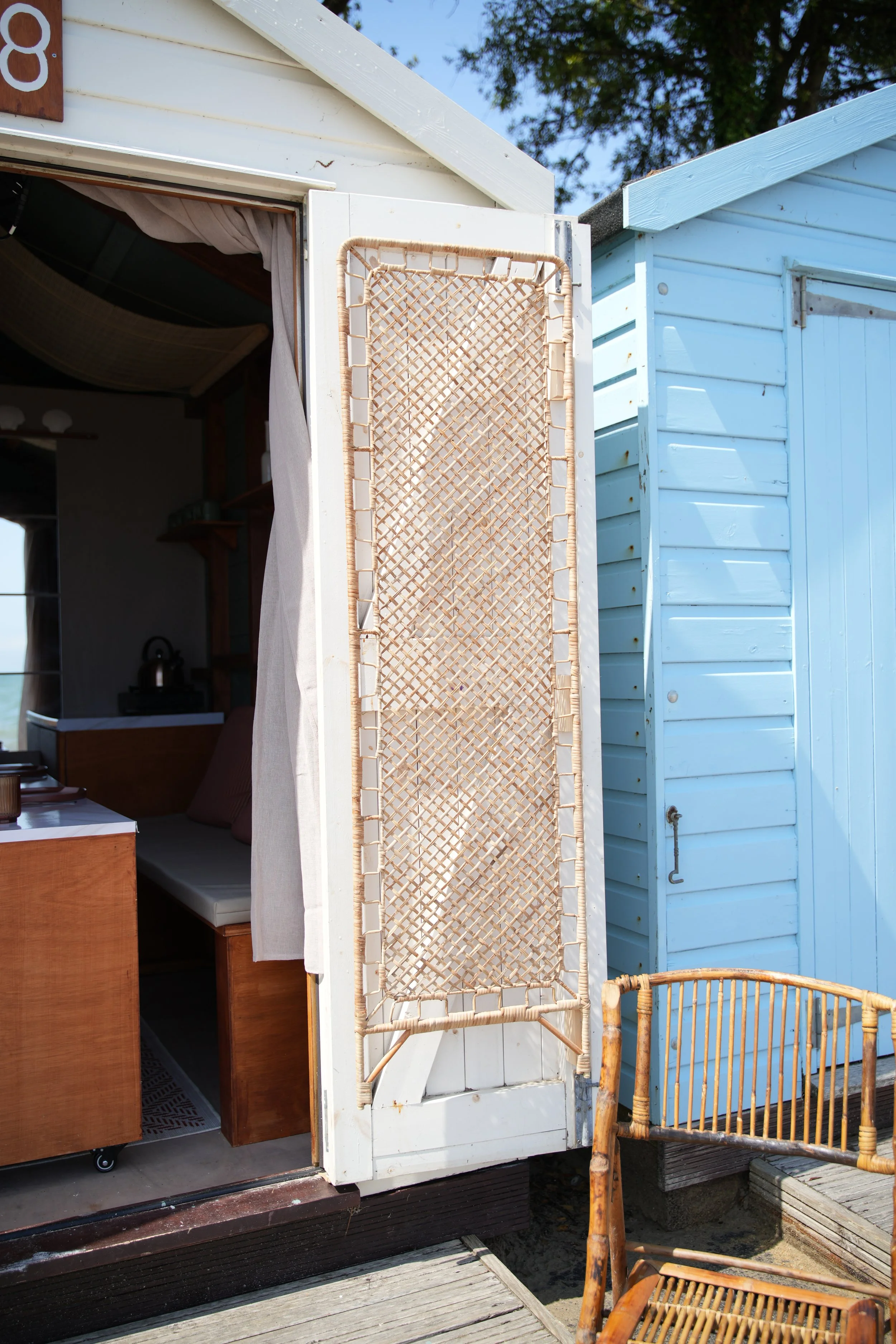
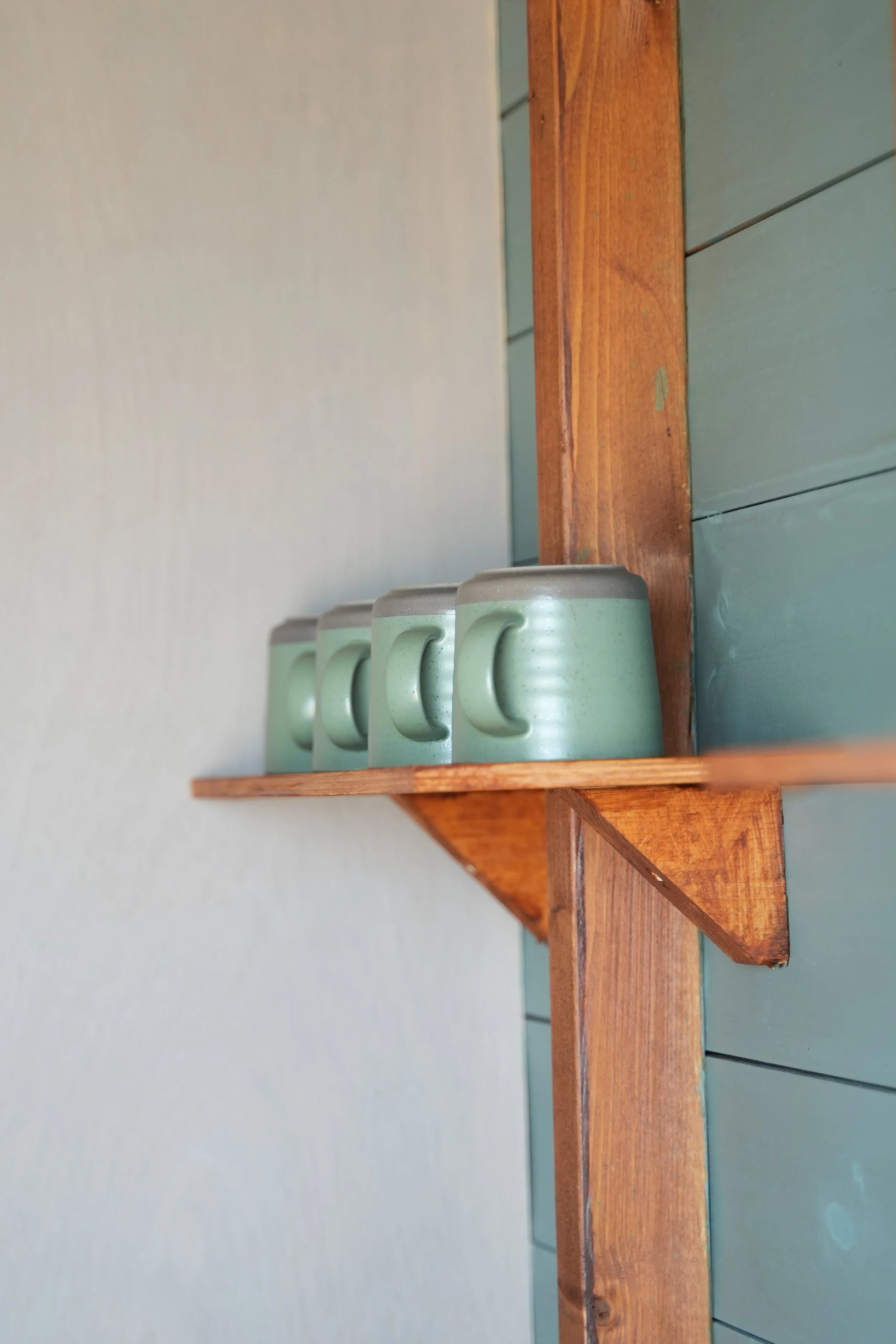
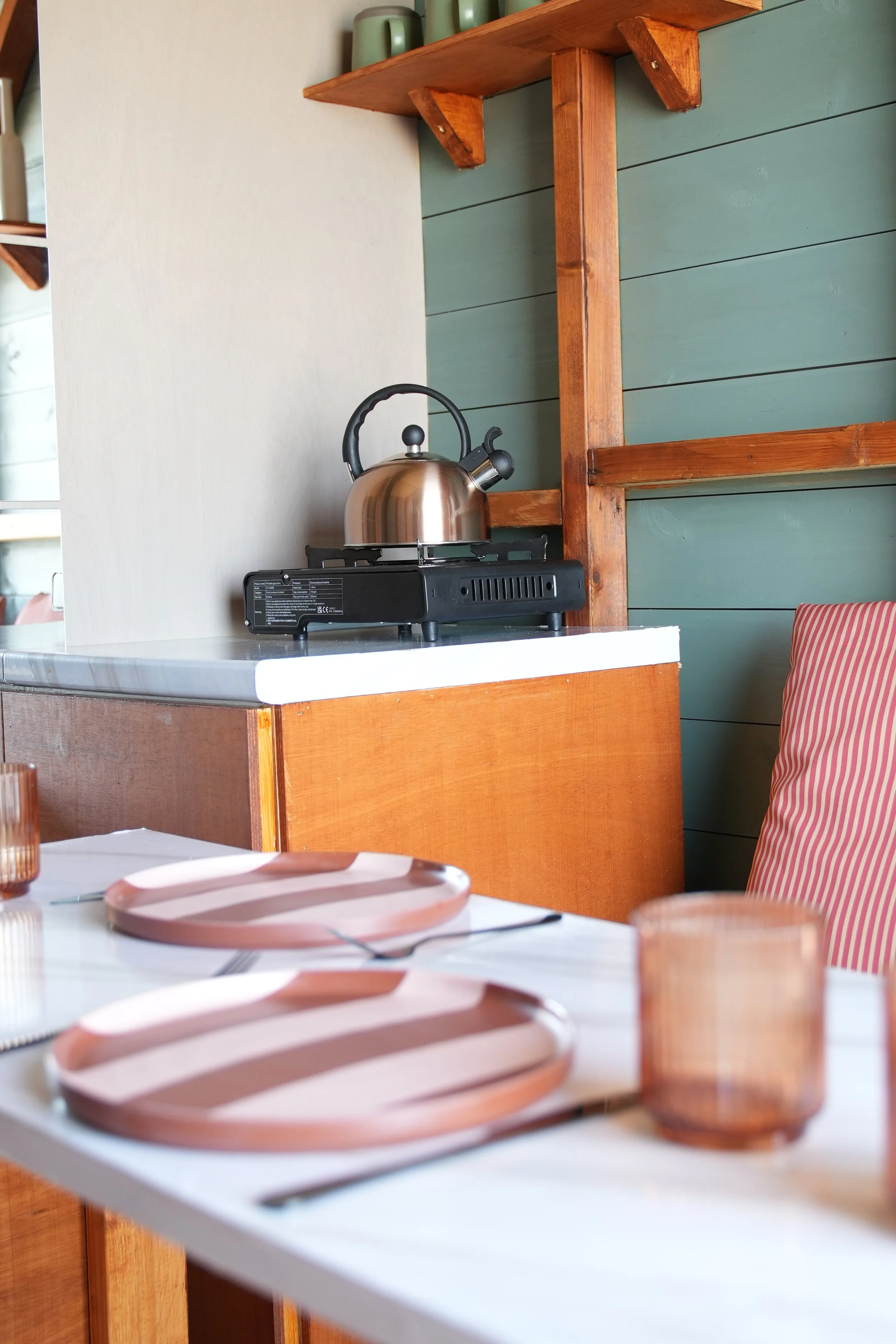
Materially, the scheme takes cues from mid-century seaside references - teak tones, bamboo textures, and a palette that feels warm and slightly muted.
There’s a familiarity to it, but it avoids leaning too heavily into nostalgia. Instead, these elements are used to ground the space, giving it a sense of continuity without feeling overly themed or referential.
What this creates is not a reimagining of the beach hut as something entirely new, but a subtle shift in how it’s understood.
A space that still carries the essence of what it once was - but works in a way that feels more aligned with how we live now.